
Modern Door Ding Repair: How Technology Makes PDR More Precise
What Paintless Dent Repair (PDR) Means for Modern Door Ding Repair
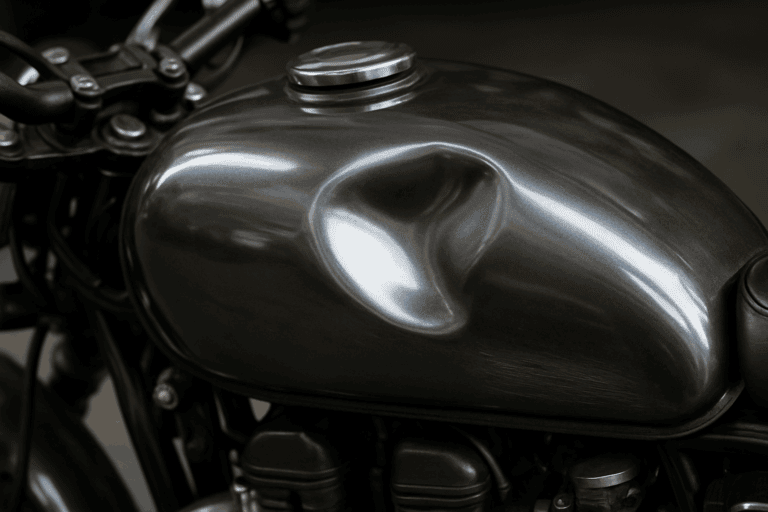
Modern door ding repair has advanced far beyond basic pushing, tapping, and hoping for the best. Today, Paintless Dent Repair is a precision-based automotive repair method that restores minor dents without sanding, fillers, or repainting. For a vehicle door ding caused by a shopping cart, an adjacent car door, or light impact near a door edge, paintless dent repair can reshape the metal while preserving the original auto paint.
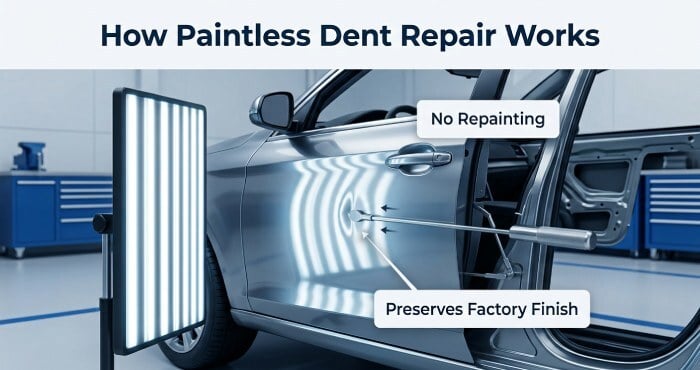
Unlike traditional auto body repair, paintless dent repair focuses on controlled metal movement. A skilled technician works behind or in front of the body panel using specialized dent repair tools, glue pulling systems, lights, and reflection boards. This makes door ding repair especially effective for minor dents, dents and dings, and small dent repair where the paint surface remains intact.
Professional door ding repair goes beyond basic dent removal, requiring an understanding of metal tension, access points, panel shape, and paint condition to restore the vehicle’s original appearance.
Why PDR Is Different from Conventional Auto Body Work
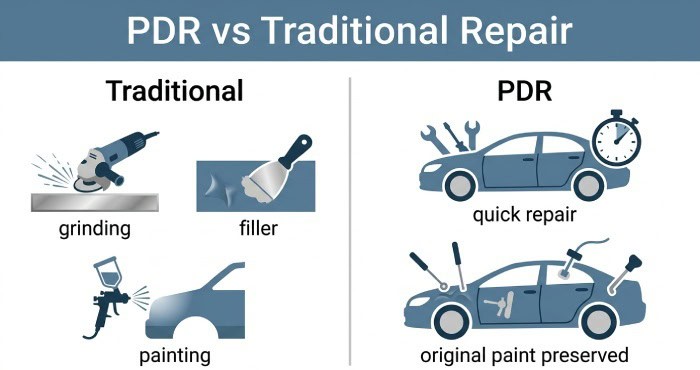
Traditional body repair may require grinding, filler, primer, blending, and repainting for deep creases, torn metal, or cracked paint. For many door dings, however, Paintless Dent Repair can restore the panel without disturbing the factory finish.
Keeping the original paint intact helps preserve the vehicle’s appearance and factory finish. When the damage is accessible and the paint remains intact, PDR can provide a faster, more affordable repair with less disruption than conventional bodywork.
Precision Tools and Glue Pulling Systems That Improve Repair Accuracy
Modern dent repair tools include whale tails, rods, picks, knockdowns, blending hammers, soft tips, glue tabs, slide hammers, mini lifters, and specialized hand tools. These automotive tools allow technicians to approach damage from different angles depending on the structure behind the door.
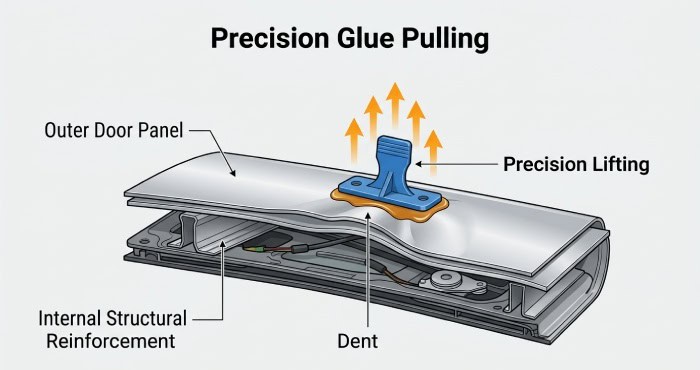
A technician may use interior access through trim openings, window slots, or factory holes. When rear access is limited, glue pulling becomes essential. Glue systems attach tabs to the exterior surface, allowing controlled lifting without drilling or repainting.
Tool Access Matters
Not every body panel provides the same access. A door with reinforcement beams, sound insulation, wiring, or limited clearance may require a combination of removal tools, a dent puller, and fine tapping techniques. The appropriate repair tools are selected based on the panel’s structure, available access, and characteristics of the dent—not just its size.
Glue Pulling Systems and Safer Ding Removal
Glue pulling has made door ding repair more versatile. Instead of forcing access behind a panel, the technician can use glue tabs and pulling devices to lift minor dents from the outside. This is particularly valuable for car door repair when internal bracing blocks a rod or pick.
A professional glue pulling system is very different from a basic suction cup dent puller. While a suction cup dent puller may work on large, shallow flexible dents, it usually lacks the precision needed for a refined car door ding fix. Professional glue pulling allows gradual lifting, tab selection, glue temperature control, and careful blending.
This technology has also influenced repair kits sold to consumers. A paintless repair kit, ding repair kit, auto dent kit, or auto repair kit may include glue tabs and a small dent puller, but the results depend heavily on technique.
Technology and Precision: Why Expertise Still Matters
Technology helps make Door Ding Repair more precise by allowing technicians to assess dents and select suitable tools and techniques. Different materials, including steel, aluminum, and high-strength panels, can respond differently to repair pressure. These factors help determine whether Paintless Dent Repair is suitable for the damage.
Before repair, the vehicle’s panel and paint condition should be inspected carefully. Cracked, chipped, peeling, or previously repaired paint may require a different repair approach. A thorough inspection helps protect the existing finish and ensures the appropriate repair method is selected.
Benefits for Vehicle Owners: Faster Repairs, Lower Costs, and Preserved Paint
For vehicle owners, modern door ding repair offers several practical benefits:
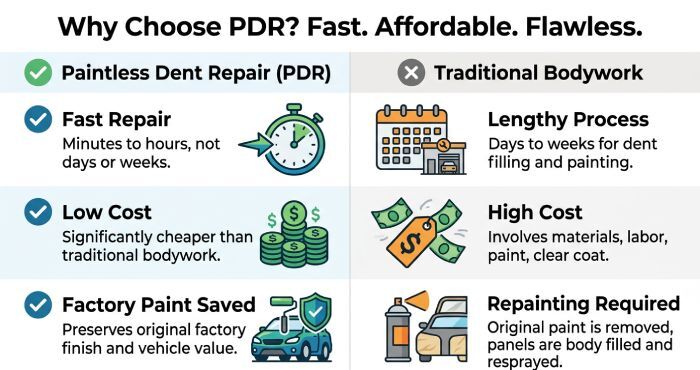
- Faster Repairs: PDR does not require filler, primer, or refinishing, so many repairs can be completed faster than traditional auto body work.
- Less Downtime: Depending on the severity and location of the damage, some owners may be able to schedule same-day repairs instead of leaving their vehicle at a body shop for several days.
- Lower Costs: Since PDR avoids paint materials, color blending, and extensive labor hours, it is often less expensive than conventional bodywork.
- Preserved Factory Paint: Keeping the original factory paint intact can help maintain long-term paint protection and support resale value.
- Improved Appearance: Repairing small door dings can help a well-maintained vehicle maintain a cleaner, more polished appearance.
- Better Visual Finish: Small dents can become more noticeable when sunlight highlights ripples across the door, making timely repair worthwhile.
Door Ding Repair Kits and Professional Dent Repair
A door ding repair kit may help with basic dent repair on shallow dents where the car paint remains intact. However, complex dents, sharp creases, and damage near body lines can be difficult to repair without professional experience. Understanding the damage and choosing the right repair approach helps protect the vehicle’s original appearance.
When to Call a Professional
Professional door ding repair is recommended for dents near body lines, reinforced areas, sharp edges, or damage involving the paint. An experienced PDR technician can assess the dent’s depth, location, and panel condition to determine whether Paintless Dent Repair or conventional body repair is appropriate. For newer, luxury, or leased vehicles, having the damage professionally assessed can help ensure the appropriate repair method is selected while preserving the vehicle’s original appearance.
About The Author