
Car Dent Repair: Why Access to the Back of a Panel Matters
How Back-Panel Access Affects Dent Repair Options
In professional car dent repair, one of the first questions an experienced technician asks is simple: Can we reach the back of the damaged panel? Back-panel access can determine whether paintless dent repair, glue pulling, door dent pulling, or traditional auto body repair is the right approach. For drivers comparing repair estimates or requesting a free estimate, this factor can significantly affect the repair method, cost, time, and final result.
For additional context on cost-effective Car Dent Repair, it helps to understand that dent repair is not just about the visible dent. The structure behind the panel, factory braces, insulation, crash beams, sound deadening, and trim access all influence the repair process.
What “Access” Means in Car Dent Repair
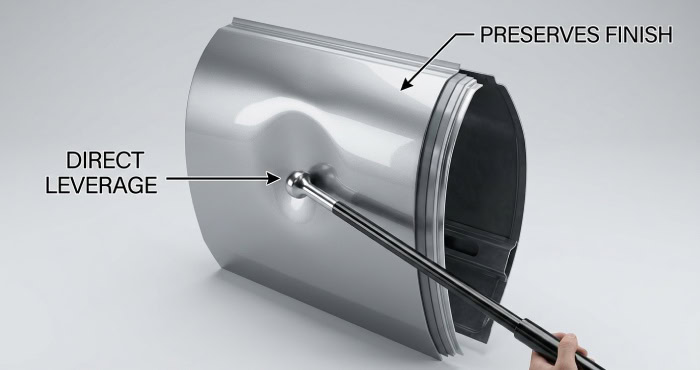
Access means the skilled technician can place specialized repair tools behind the dented metal and carefully massage the damage outward. In paintless dent removal, the goal is to restore the panel without sanding, filling, or repainting. This is why paintless dent repair is often preferred for door dings, hail damage, vehicle dents, and even some large dents.
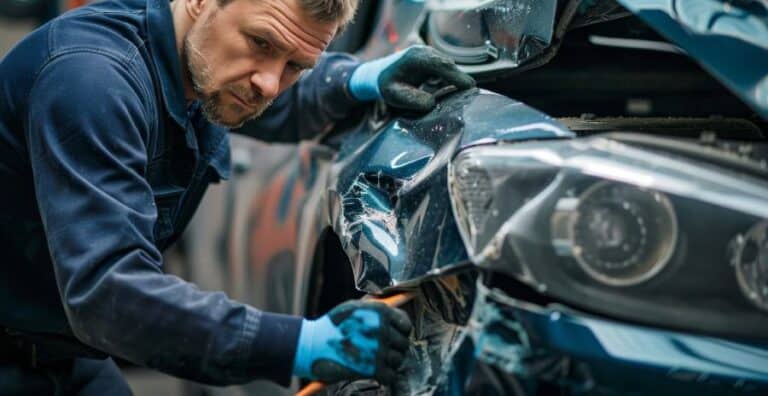
A technician may inspect the customer’s vehicle, review the dents under proper lighting, and perform a damage inspection before providing a repair estimate.
Clean Access: Faster, Cleaner Dent Removal
When access is clean, dent removal can be more predictable. Door panels, hoods, trunk lids, and certain car fenders often allow direct tool usage, making paintless dent removal more efficient. With the right leverage, a tech can slowly move the low area back into shape while preserving the factory finish.
Repair tools, damage inspection, and repair estimate
During the repair process, technicians use rods, whale tails, knockdowns, blending hammers, and reflection lights. These repair tools help identify highs and lows in the metal. A proper damage inspection also helps determine whether a quick repair is realistic or whether deeper panel repair is needed. This is especially important for hail damage and clusters of door dings.
Restricted Access: Slower Panel Repair
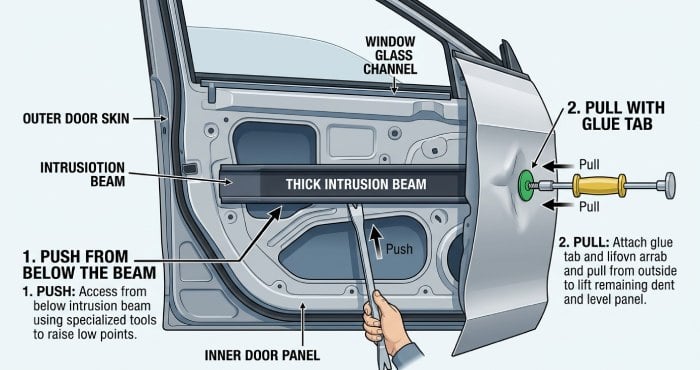
When access is blocked, dent repair becomes more complex. Reinforcement bars, sealed cavities, laminated panels, or tight body lines may prevent direct pushing. This is where door dent pulling or glue pulling may be considered.
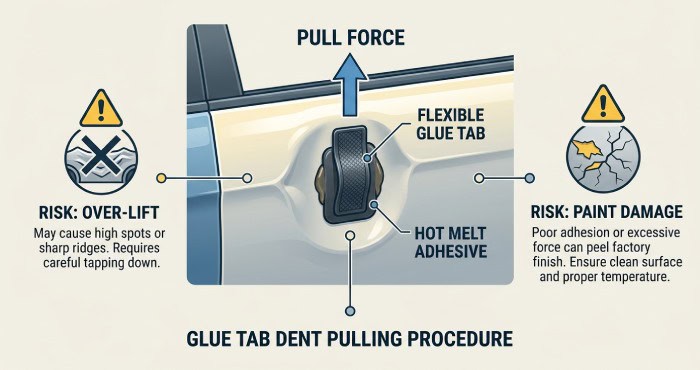
Glue tabs, dent puller, and hard pull risks
A dent puller with glue tabs can lift some vehicle dents from the outside. However, a hard pull can over-lift the metal, disturb paint, or create new highs if the technician is not careful. Door dent pulling requires controlled force, strong technique, and patience. It is useful, but it is not always a substitute for direct access from behind the panel.
Paintless Dent Repair: Why Tool Reach and Leverage Are Critical
Paintless Dent Repair depends on controlled pressure and accurate tool placement. In PDR, the technician is not simply “popping” a dent out. Paintless dent repair involves hundreds of tiny movements that guide stretched or displaced metal back to its original contour.
Why Leverage Changes the Outcome
Leverage determines how precisely a technician can move the dent. If the tool tip can reach the deepest point of the damage, paintless dent removal is more likely to produce a clean result. If the tool cannot reach, the tech may have to combine techniques that work, including glue pulling, tapping, blending, or partial trim removal.
Door dings, large dents, and hail damage behave differently
Door dings are usually small but may sit on a body line or behind a brace. Large dents may have more metal movement and require more time. Hail damage can involve dozens or hundreds of small impacts across the roof, hood, and trunk. Each type of dent repair requires different access planning.
Door dent pulling from behind the panel
Door dent pulling is most effective when the inner door trim can be removed and the backside of the dent is reachable. For door dings near intrusion beams, however, access may be limited. In those cases, door dent pulling may be combined with glue pulling from the outside. This hybrid approach may be used when direct access is limited.
When Limited Access Requires Glue Pulling or Traditional Repair
Limited access does not automatically mean the panel cannot be repaired. It means the technician must choose the safest method. Glue pulling is often used for roof rails, quarter panels, bedside panels, and other enclosed areas. For some large dents, a combination of paintless dent repair and controlled glue pulling can avoid repainting.
However, not all vehicle dents are good candidates for paintless dent removal. If the paint is cracked, the metal has a sharp crease, or the panel is stretched beyond what PDR can safely correct, traditional auto body repair may be more appropriate. This can involve sanding, filling, priming, and refinishing the damaged area. In these situations, car dent repair may require techniques that go beyond paintless dent repair.
Common Vehicle Areas Where Back Access Is Easy—or Difficult
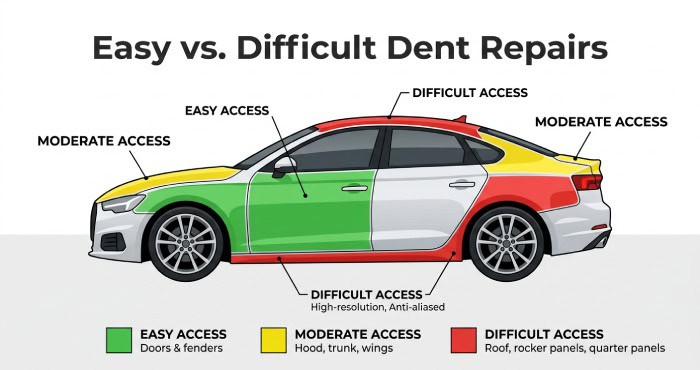
Hoods, trunks, doors, and fenders vary in accessibility, affecting how technicians approach dent and panel repairs.
Examples: doors, wings, roofs, quarter panels
Roofs can be difficult because headliners may need to be lowered, especially for hail damage repair. Quarter panels can be challenging because their construction and surrounding components may limit access. Rocker panels and roof rails are among the most difficult areas for dent removal because backside access is limited or nonexistent.
Wing dent access and wing repair
Wing dent access varies by vehicle. On some models, wing repair is straightforward after removing a liner or light assembly. On others, bracing blocks the tool path. This is why an in-person appointment or photo-based pre-screen is useful before approving vehicle repair.
What Drivers Should Ask Before Approving a Dent Repair
Before approving car dent repair, ask about panel access, repair method, expected finish, and any limitations.
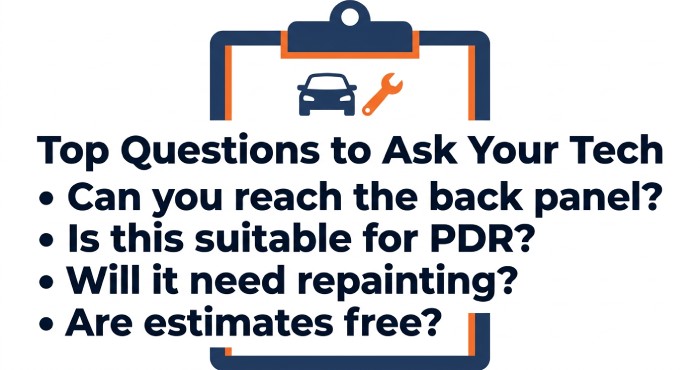
Good questions include:
- Can the technician reach the back of the damaged car panel?
- Is this dent repair suitable for paintless dent repair?
- Will glue pulling or a dent puller be used?
- Are the door dings, large dents, or hail damage likely to need repainting?
- Is the repair quote based on photos or an in-person damage inspection?
- Does the repair shop provide a free estimate?
- What happens if the finishing panel does not meet expectations?
- Are there customer reviews showing similar dented vehicle results?
- Is account service available for fleet, dealership, or insurance-related vehicle repair?
These questions help drivers choose professional repairs, as back-panel access is crucial for safely and effectively removing minor dings, large dents, hail damage, and complex vehicle dents.
About The Author