
Does Hail Damage Repair Require Removing Interior Panels?
In many cases, Hail Damage Repair does not require removing interior panels. Modern paintless dent repair methods allow qualified technicians to access and massage dents from behind the metal using existing factory openings, specialized rods, glue-pulling systems, and lighting. However, some hail damage locations—especially on roof rails, pillars, deep body lines, or areas with bracing—may require limited panel removal as part of a safe, well-documented repair plan.
The right answer depends on the damage assessment, the severity of the storm damage, the vehicle’s construction, and whether the shop is using paintless dent repair, conventional repairs, or a combination of both.
How Hail Damage Repair Works: Paintless Dent Repair vs. Traditional Methods
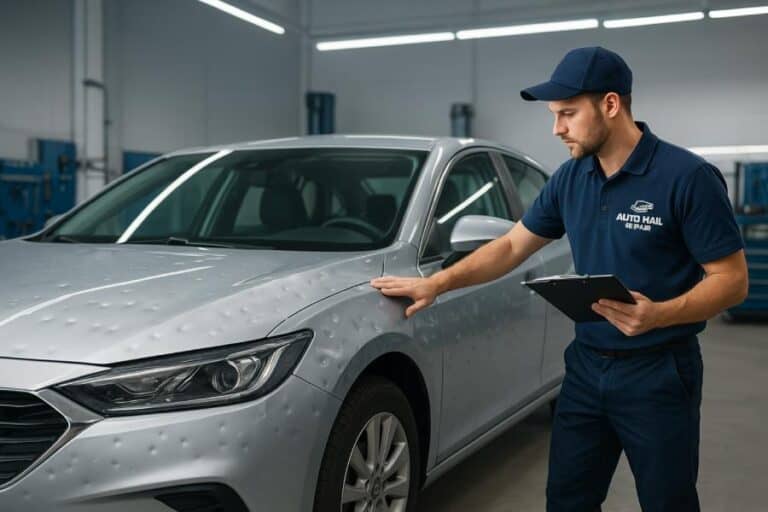
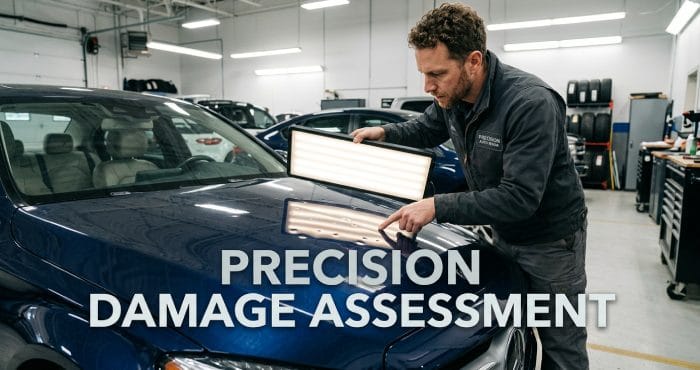
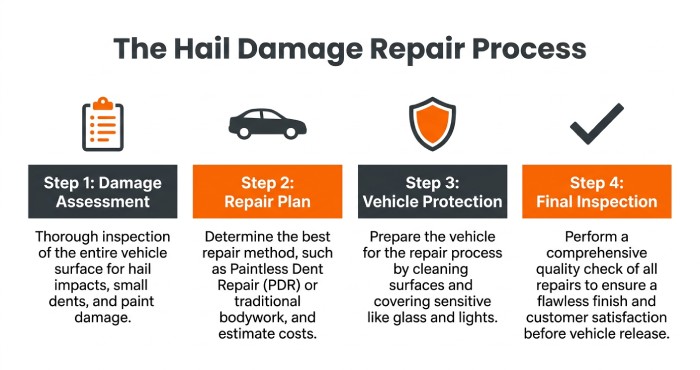
The first step in any quality hail damage repair is a detailed damage assessment. Professional estimators inspect the vehicle under specialized lights, count the dents, identify stretched metal or cracked paint, and determine whether paintless dent repair is realistic. This assessment becomes the basis for the repair plan, insurance estimate, and final vehicle repair strategy.
For vehicle owners researching options, resources such as Paintless Dent Repair explain how technicians can restore panels without repainting when the finish is intact. A more detailed guide to Hail Damage Repair can also help owners understand how hail affects value and why timely car repair matters.
Paintless dent repair and paintless dent removal
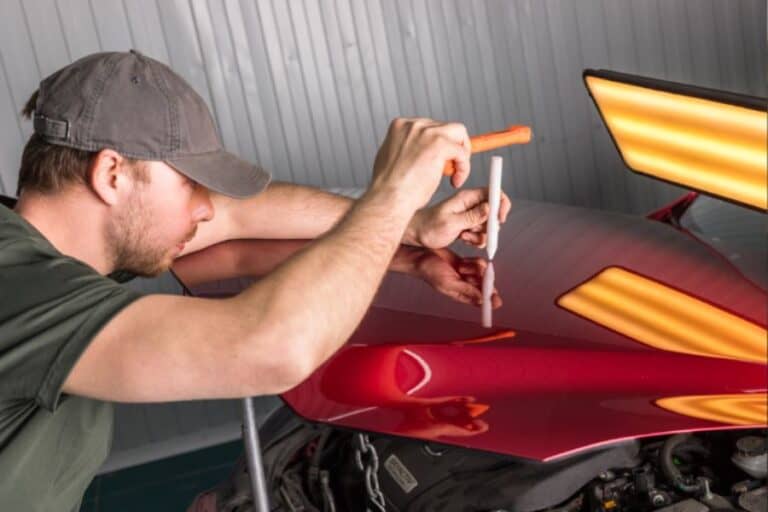
Paintless dent repair—also called paintless dent removal—is often the preferred method for fixing hail damage because it preserves the original factory paint. Instead of sanding, filling, priming, and repainting, technicians use precise pressure to reshape the metal from behind the panel or pull the dent from the outside.
This can be a cost-effective repair because it often reduces labor, materials, and refinishing time. It also supports a cleaner vehicle repair outcome, especially when the goal is returning the car to its pre-storm condition. In a proper hail damage repair, PDR is often faster than conventional repairs and may help protect resale value.
Tool access without dismantling the cabin
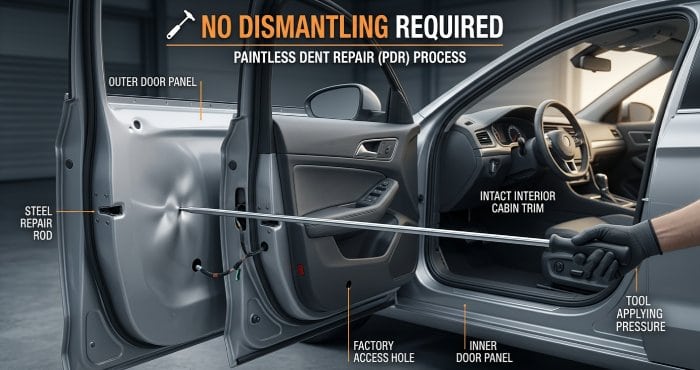
In many cases, technicians can reach dents through hood openings, trunk openings, door access holes, wiring grommets, headliner edges, or factory service ports. This is why hail damage repair frequently does not require full interior panel removal. Skilled auto repair experts use state-of-the-art equipment, reflection boards, LED lights, and highly refined repair techniques to work around trim whenever possible.
Conventional repairs and refinishing
When the paint is cracked, the metal is sharply creased, or the dent is too severe for PDR, conventional repairs may be necessary. These methods can include sanding, filler, primer, paint blending, and clear coat. This is common in broader auto body repair and collision repair, especially when the same vehicle has auto collision damage in addition to hail damage.
When Technicians Can Repair Hail Damage Without Removing Interior Panels
Interior panels usually stay in place when the dents are accessible through exterior openings or factory access points. Hoods, trunks, upper doors, and many roof areas can often be repaired with minimal disassembly. For example, technicians may remove a tail light or loosen a small trim piece rather than taking apart an entire interior.
Common no-removal scenarios
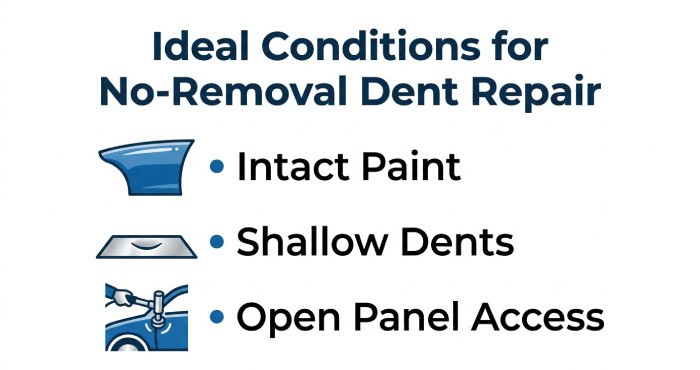
No-removal hail damage repair is more likely when:
- The paint is intact and flexible
- The dents are shallow to moderate
- The panel has open backside access
- The dent is not trapped under structural bracing
- The vehicle has not had prior poor-quality car repair or thick body filler
- The repair plan prioritizes paintless dent repair over repainting
This is where experienced qualified technicians make a major difference. Professionals who handle door ding repair, hail claims, and vehicle repair daily can often avoid unnecessary trim removal. A careful damage assessment helps the repair shop determine whether fast repair is possible without compromising quality.
Situations Where Interior Panel Removal May Be Necessary
Interior panel removal may be necessary when technicians cannot safely access the backside of the dent any other way. This does not mean the shop is doing anything wrong; in some cases, limited removal is part of a proper repair plan and better than forcing tools into the wrong space.
Common situations include:
- Roof dents that require partial headliner lowering
- Quarter panel damage with blocked access
- Dents near reinforcements, braces, or airbags
- Severe hail damage with stretched metal
- Damage near wiring, sensors, or sunroof assemblies
- Prior conventional repairs that changed panel thickness or access
- Repairs requiring both paintless dent repair and refinishing
A reputable auto body repair or collision repair facility should explain why removal is needed, what parts will be removed, and how clips, airbags, wiring, trim, and seals will be protected. Good customer service includes showing the customer the damage documentation, explaining the repair options, and noting any risks before work begins.
What to Expect During the Repair Process, Including Time, Cost, and Vehicle Protection
A professional repair process usually starts with vehicle intake, photos, and a written damage assessment. A qualified estimator checks the damage, prepares an estimate, and develops a repair plan.
If the vehicle is unsafe to drive because of broken glass or severe storm damage, the repair shop may help arrange tow services. If repairs take several days, rental cars may also be available, depending on insurance coverage and shop policies.
Repair time and cost can vary. A few small dents may take less time to repair. Extensive hail damage across the hood, roof, trunk, and side panels may require several days or longer.
Paintless dent repair can often provide an efficient repair option for suitable dents. More severe damage may require conventional body repairs, parts replacement, refinishing, or additional labor.
During busy periods after major hailstorms, scheduling may take longer. A professional repair shop should provide clear updates throughout the process.
Before choosing a shop, ask about the repair warranty. Confirm what the warranty covers and how long it remains valid. A written warranty can provide additional confidence in the quality of the workmanship.
Vehicle protection is also important during repairs. Proper precautions may include seat covers, battery protection, careful trim removal, glass protection, and inspection of clips and fasteners.
After repairs are complete, the vehicle should receive a final inspection. The repaired panels should be checked for proper appearance, alignment, finish, and overall quality.
Clear communication and careful workmanship can help ensure that the vehicle is restored as closely as possible to its pre-storm condition.
About The Author