
9 Times Professional Motorcycle Dent Repair Is the Smarter Move
If you find that your motorcycle’s fuel tank or fender has been dented, deciding whether to fix it yourself or hire a professional can affect the outcome. Today, advanced methods like paintless dent repair (PDR) and specialized tools enable the restoration of panels without harming the paint finish. Often, opting for professional services is the more reliable way to preserve both the aesthetic and structural quality of your motorcycle.
1. The dent is on a fuel tank seam, filler neck, petcock bung, or mounting point
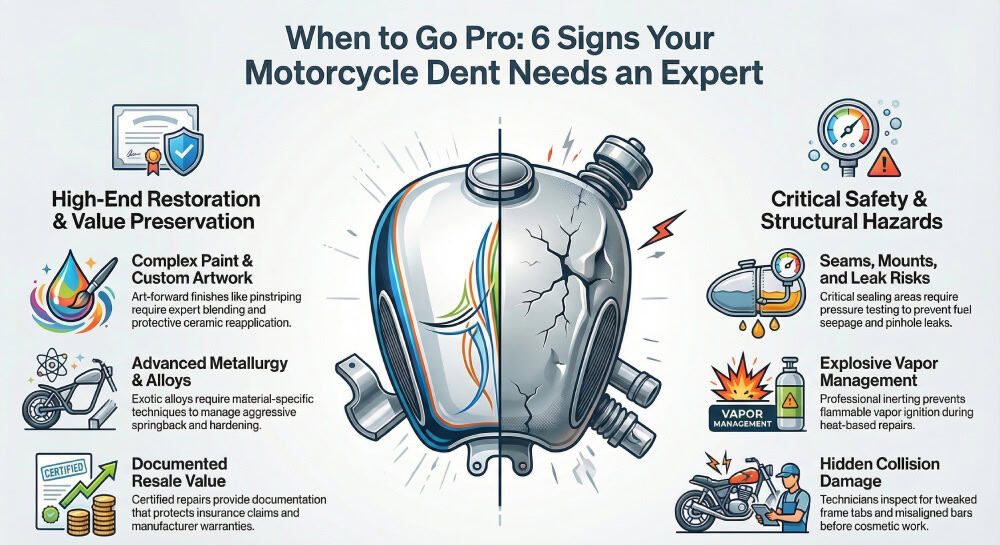
High-stress and leak-prone areas on a motorcycle gas tank demand specialized motorcycle gas tank dent repair. A dent around a seam, filler neck, petcock bung, or mount can compromise welds and sealing surfaces. Pros pressure-test, inert, and sometimes vacuum-check the tank after the dent removal process to verify no seepage. They’ll also inspect brackets and bungs for micro-cracks and confirm the tank’s structural integrity. Attempting DIY repairs here risks pinhole leaks, distorted mounting geometry, or hidden corrosion. Whether it’s a Harley Davidson bagger tank or a slim Ducati café-style shell, entrust gas tank dent work in these zones to experienced motorcycle technicians.

2. The paint is cracked, chipped, or spidered
Once a paint finish is broken, the repair moves beyond pure PDR into integrated paint repair. Professionals assess if localized bodywork, rust mitigation, and paint-matching will blend into original equipment manufacturer (OEM) or custom motorcycles without halos. On custom hogs with pinstriping, metallic, or pearlescent coats, expert technicians will sand, seal, and blend strategically to maintain the depth and flop. They can also reapply protective coatings like PPF or ceramic after refinishing. This approach is crucial for dented tanks on rare Harley Davidson paint codes, Ducati tri-coats, or a period-correct Honda CB550 Cafe Racer undergoing motorcycle restoration.
3. The dent is sharp, creased, or shows stretched metal
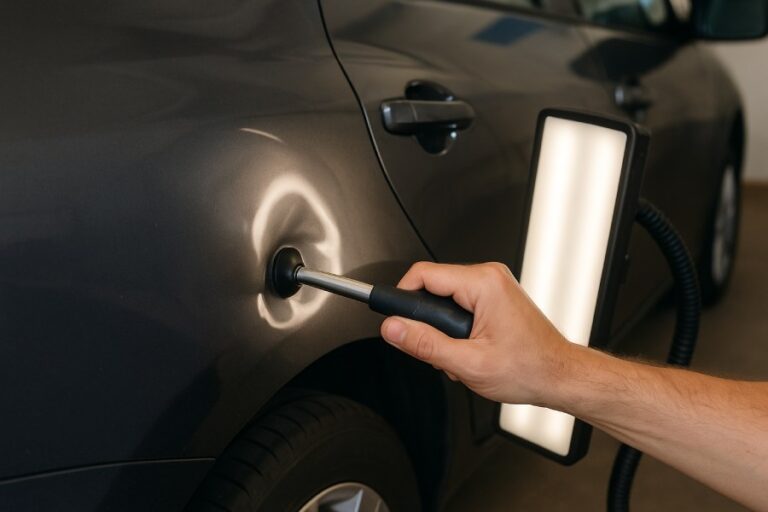
Deep dents in gas tanks, characterized by their sharp edges and creases, result in stretched metal that is difficult to work with, posing risks during repairs. Successful dent removal for motorcycles relies on a combination of controlled heating techniques, shrinking, glue pulling, and expert manipulation with PDR rods to restore the original shape of the metal without harming the paint.
As stretched metal becomes less flexible, improper handling can lead to raised areas, waviness, or cracks near the dent. Experienced technicians—especially in collision repair—skillfully combine glue pulling with careful pushing, applying heat and tapping to contract overstretched areas, and meticulously controlling the pressure to prevent blemishes, ensuring a repair that is smooth and free of fillers
4. Access is limited (tank baffles, braced fenders, frame rails)
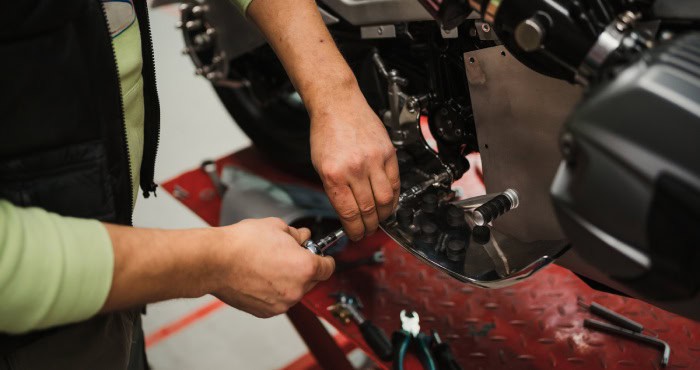
Limited access—behind baffles in a motorcycle gas tank, under braced fenders, or near frame rails—requires a professional dent removal plan and the right fixtures. Pros use tank plugs, inerting rigs, borescopes, and adjustable lighting to see and read the metal. Safe adhesives and leverage fixtures enable controlled pulls when internal access is impossible. If you’re dealing with tight radii on Choppers, Bobbers, or Brats, or deep-set dings on Sportbikes and Touring bikes, a seasoned repair shop will sequence the dent removal process so each move sets up the next.
5. Fuel or vapors are present, or heat might be used
Any motorcycle gas tank dent repair performed with even mild heat must account for flammable vapors. Professional motorcycle repair teams purge or inert tanks, monitor oxygen levels, and protect internal coatings. The protocols prevent fume ignition and avoid damaging ethanol-resistant liners common on modern motorcycle models. Shops from Washington, DC in the DC Metro Area to a Dentmasters shop on Jln Cempaka Wangi No 22, Jakarta – Indonesia, follow strict fire-safe procedures for Moge and smaller bikes alike, ensuring the work area, the tank, and the technician remain safe.
6. The bike has custom graphics, pinstripes, special-effect paint, or PPF/ceramic
Art-forward finishes demand precision. On Baggers with airbrushed murals, Brats with hand-laid pinstripes, or Custom hogs sprayed in multi-stage pearl, professionals stage motorcycle dent repair and necessary refinish so artwork aligns and depth is preserved. If PPF, vinyl, or ceramic coatings are present, they’ll remove and reinstall them cleanly to prevent trapped edges or color shifts. After repairs, they’ll advise on post-repair care, reapplication of protective coatings, and routine inspections to keep the finish show-ready.
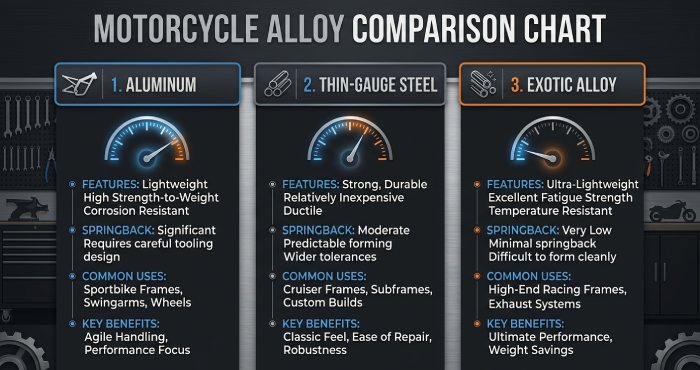
7. The panel is aluminum, thin-gauge steel, or an exotic alloy
Different alloys have distinct springback and work-hardening behaviors. Aluminum fenders on Ducati or select Harley Davidson trims rebound aggressively; thin steel tanks on vintage Honda or a custom Honda CB550 Cafe Racer respond better to subtle metal massage. Exotic alloys on one-off builds—Zeus projects, Honda Zeus customs, or boutique Cafe Racer tanks—need material-specific tap-downs, tips, and repair techniques. Here, PDR excels when guided by experience, but pros also know when to pivot to traditional dent repair or limited paint repair to preserve safety and bike resale value.
8. The dent followed a drop or crash with possible alignment issues
If a dented motorcycle came from a tip-over, collision, or even hail damage, treat the cosmetics as step two. Pros first inspect for hidden damage: tweaked frame tabs, bent triples, misaligned bars, stressed tank mounts, or compromised motorcycle body panels. On sportbikes and touring bikes alike, alignment and safety checks come before any motorcycle gas tank dent repair or motorcycle fender dent work. A thorough quality check protects rider safety and prevents re-damaging fresh repairs. It’s standard practice at established names like Moto Dents or DentMasters in Washington, DC, as well as independent builders such as Jaime C Dixon who document complex jobs—often on Elementor-powered galleries.
9. You’re protecting resale value, warranty, or filing insurance
Both insurance companies and motorcycle owners prefer dent repairs that are well-documented and come with warranties. Professional shops that adhere to OEM guidelines, provide detailed quotes, and conduct comprehensive quality checks are essential. This documentation safeguards your warranty and enhances resale value. Regardless of whether you have a Harley-Davidson, Ducati, or Honda, using a professional service guarantees a dependable and transparent process that maintains your motorcycle’s appearance and worth.
Professional motorcycle dent repair isn’t just about making a gas tank dent disappear. It’s about applying the right blend of PDR and, when needed, traditional dent repair, safeguarding structural integrity, and finishing to an OEM or custom standard. From fender dents on Choppers and Bobbers to complex motorcycle gas tank dent repair on custom motorcycles, the smartest move is to let expert technicians with precision tools handle the work—so your dings, creases, and scars become invisible chapters in your bike’s story.
About The Author