

Mobile Dent Repair for Aluminum Panels and Modern Vehicle Designs
Modern vehicles use lightweight materials, complex body structures, and advanced safety systems that affect how dent removal is performed. Aluminum panels and intricate body designs require specialized tools, careful assessment, and precise repair techniques. Mobile dent repair now demands greater expertise and a structured process to restore vehicle panels while preserving the original paint whenever possible.
For drivers comparing Mobile Dent Repair with a traditional Body Shop visit, the key is understanding when mobile paintless dent repair is appropriate, when collision repair is necessary, and how to choose a skilled technician who can protect the original paint.
Why Aluminum Panels Require Specialized Mobile Dent Repair Techniques
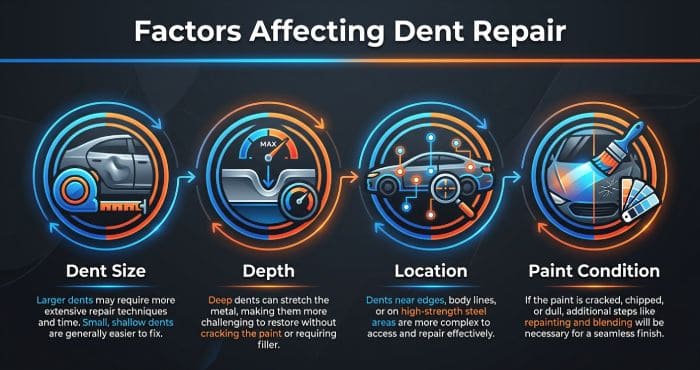
Aluminum panels are harder to repair than steel panels. They need careful pressure and heat during PDR. Mobile dent repair requires skill in metal movement, glue pulling, and paint protection. Repair costs depend on the vehicle, dent size, depth, location, paint condition, and tool access. A small door ding may be easy to fix, while a dent near an edge or reinforced area may need more work.
Aluminum vs. Steel: Metal Memory, Heat, and Tooling
Steel panels can often be repaired by gently massaging the dent from behind with specialized tools. Aluminum panels require different pressure, greater patience, and sometimes controlled heat to reduce the risk of cracking or paint damage. Mobile paintless dent repair technicians may also use glue pulling from the exterior when access behind the panel is limited. Proper training and experience help technicians understand how different metals respond to pressure and heat. Although aluminum is not always harder to repair than steel, it is less forgiving of rushed techniques and requires careful handling to achieve a quality result.
Preventing Paint Stress and Panel Distortion
The goal of Paintless Dent Repair is to preserve the original paint while restoring the shape of the panel. Aluminum can be more vulnerable to highs, lows, and slight waves if the technician uses too much force. Quality workmanship means moving the metal gradually, reading the reflection accurately, and avoiding aggressive pushes that create visible crowns.
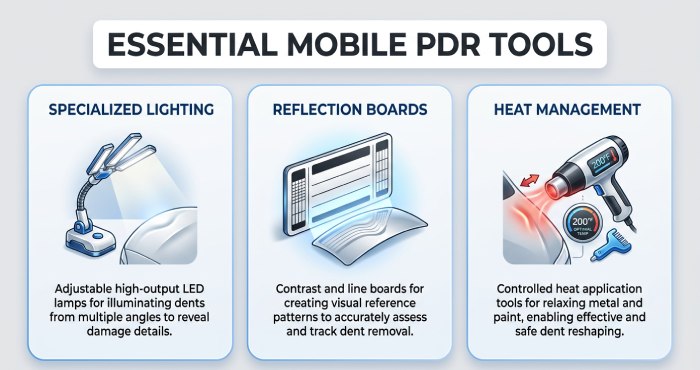
A proper mobile service should include lighting, reflection boards, temperature management, and careful panel inspection.
When Aluminum Is a Strong Candidate for PDR
Aluminum panels are good candidates for mobile paintless dent repair when the paint is intact, the dent is shallow to moderate, and the metal has not been overstretched. Door dings, small hail dents, shopping cart impacts, and many minor dents can often be repaired through PDR. Deep dents, torn paint, crushed edges, or impact damage near seams may require different repair options, including traditional refinishing or collision repair.
How Modern Vehicle Designs Affect Dent Access, Tools, and Repair Strategy
Modern vehicles require skilled mobile dent repair, which helps dealerships and fleets avoid body shop delays.
Access Planning for Sensors, Bracing, and Bonded Structures
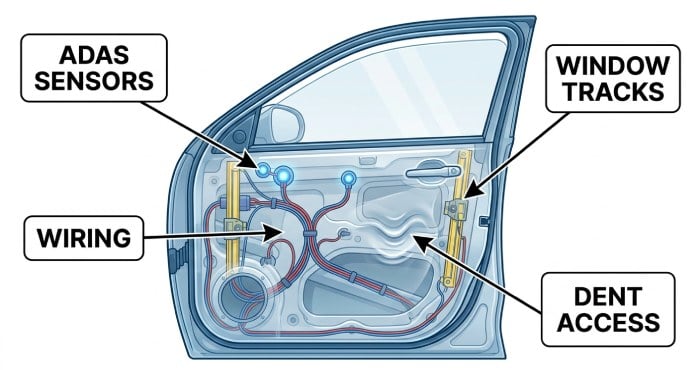
Before dent removal begins, the technician should evaluate how to reach the damage safely. Some door dings can be accessed through a window opening, while other body dents require removal of trim, taillights, inner liners, or underhood insulation. On advanced designs, the technician must also avoid disturbing Advanced driver-assistance systems (ADAS) components, wiring, and structural adhesives.
This is where a repair estimate becomes more than a quick price. A reliable mobile paintless dent repair provider may request damage photos, before and after photos from similar repairs, and details about the vehicle make and model. An estimate based on photos can be useful, but final pricing may change once the technician inspects the panel in person.
Door Panel and Luxury Model Considerations
Door panels on luxury vehicles may contain reinforcements and electronics that make paintless dent repair (PDR) more complex. Even small dents may require specialized tools or glue pulling. A skilled technician knows how to protect interior trim, clips, wiring, and sensors during repairs. Reviewing customer feedback and before-and-after photos can help assess workmanship and repair quality, especially on aluminum panels and modern vehicles.
Paintless Dent Repair vs. Traditional Methods for Aluminum Body Panels
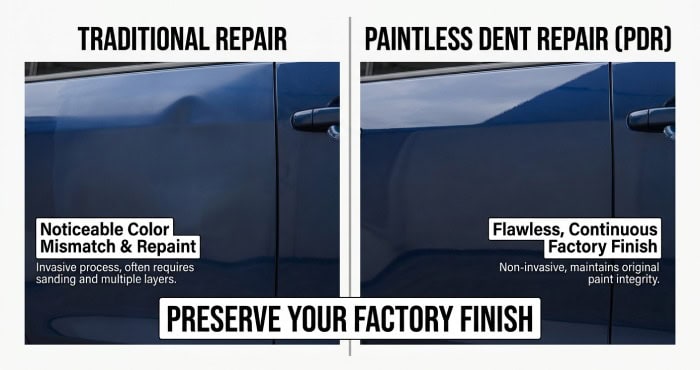
Paintless Dent Repair (PDR) is a good body shop alternative when the paint is intact. It reshapes the metal without sanding, fillers, or repainting. This makes PDR an environmentally friendly option with less waste. Mobile PDR can also cost less than traditional repairs. It may help avoid an insurance claim when the repair cost is below the deductible. For door dings, hail dents, and minor damage, PDR can restore the vehicle’s appearance quickly.
Preservation, Cost, and Repair Turnaround
PDR preserves the vehicle’s original paint, helping prevent color mismatches on metallic, pearl, matte, and specialty finishes. It can also help maintain vehicle value. Mobile dent repair offers added convenience by allowing customers to have dents repaired at home or work, often with a faster turnaround than traditional body shop repairs. In the Dallas–Fort Worth area, mobile services can assist vehicle owners in Irving, Las Colinas, Flower Mound, and nearby communities.
Limits: Deep Dents, Sharp Creases, and Collision Repair
PDR has limitations. Deep dents with stretched metal, cracked paint, torn aluminum, damaged edges, or severe collision repair needs may not be suitable for mobile dent repair alone. In those cases, the technician should explain repair options honestly instead of promising impossible results.
A repair guarantee or lifetime warranty may apply to workmanship, but it cannot change the physics of damaged metal. A reputable provider will clarify what the Warranty covers, whether the repair will be 100% invisible, and when traditional refinishing is the safer choice.
Benefits and Limitations of On-Site Dent Repair for Today’s Vehicles
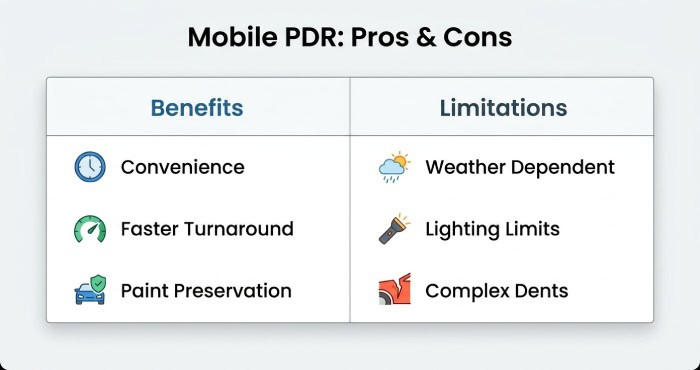
Mobile dent repair offers convenience, speed, and paint preservation. Technicians can repair door dings, small dents, and minor aluminum panel damage at homes, offices, dealerships, or fleet locations.
However, weather, lighting, workspace, and panel access can affect repairs. Some dents require shop-based service. A reliable technician should explain the cost, turnaround time, and expected results before starting work.
Choosing a Qualified Mobile Dent Repair Technician for Aluminum and Advanced Designs
Choose an experienced technician with proper PDR training, good reviews, and clear pricing. Ask about aluminum and steel repairs, damage assessments, photo estimates, and possible extra costs.
A reliable technician will explain the repair process and its limits. Deep dents, cracked paint, or structural damage may require a Body Shop. For suitable damage, mobile paintless dent repair offers a convenient way to restore dents while preserving the original paint.
About The Author