
7 Factors That Determine Whether a Deep Car Crease Can Be Repaired With PDR
Deep creases are challenging car dents because they involve significant depth, metal tension, and possible stretching. Paintless dent removal (PDR) can repair these dents when the original paint remains intact, panel access is possible, and the damage is within the metal’s limits. This process helps preserve the factory finish and vehicle value without fillers or repainting.
A qualified PDR technician examines the damage, checks reflection patterns, and assesses the panel before recommending PDR or conventional body repair. The following seven factors help determine whether a deep crease is suitable for PDR and what results to expect.
Factor #1: Depth and Sharpness of the Crease
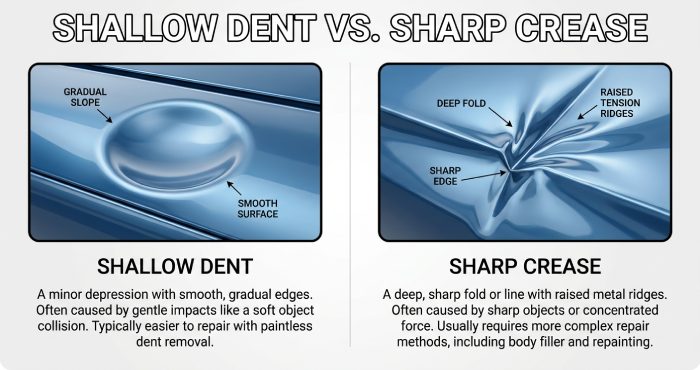
The deeper and sharper the crease, the more difficult the dent repair becomes. A shallow crease with rounded edges usually responds well to paintless dent removal because the metal has not been severely displaced. A sharp crease, especially one that looks like it was made by a hard edge, may indicate that the metal has been pinched or stretched beyond a simple PDR correction.
In professional car dent repair, the technician reads the low and high areas around the crease. A deep center line often has tension ridges on both sides, and those ridges must be slowly reduced before the main low spot can be lifted. This is where PDR becomes less about force and more about controlled pressure, tool placement, and patience.
Factor #2: Whether the Paint Is Cracked, Chipped, or Stretched
When Paint Chip Repair Becomes Part of the Plan
If the crease includes a visible chip, exposed metal, or spider-cracking, paint chip repair may be necessary to prevent corrosion and improve appearance. Paint chip repair is different from PDR because it addresses the coating, not the dent shape. In some cases, a body shop may recommend refinishing the entire panel, especially if the damage is located in a highly visible area.
A good repair service will explain the difference between paintless dent removal, micro-damage-repair, paint chip repair, and full auto bodywork. If the factory finish can be saved, PDR is usually preferred. If the paint has failed, a body shop may need to use sanding, primers, paint, blending, or body filler to restore the surface.
Factor #3: Location of the Crease on the Vehicle Panel
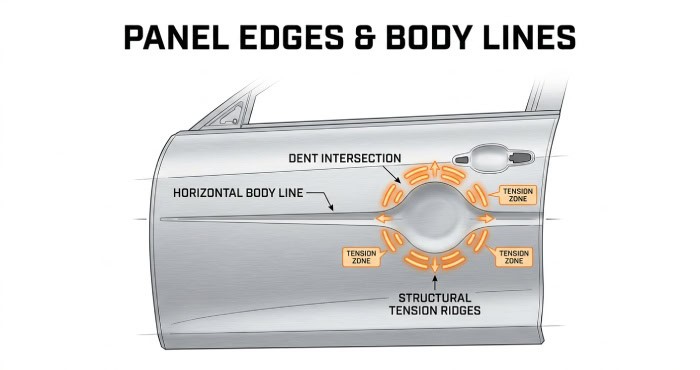
Why Panel Edges and Body Lines Matter
Edges, crowns, and character lines hold more tension than open areas. When a crease runs across a body line, the technician must rebuild both the dented area and the original contour. This demands more skill than standard car dent repair because the reflection must match the surrounding exterior.
Bumper repair is a separate consideration. Many bumpers are plastic, not metal, so paintless dent removal may not apply in the same way. Some bumper repair can be done with heat and reshaping, but cracked plastic, torn tabs, and missing paint usually require auto bodywork. If the damage is on a painted bumper cover, a repair service may combine bumper repair with paint chip repair or refinishing.
Factor #4: Accessibility Behind the Damaged Area
Mobile Service, On-Site Repairs, and Access Limitations
A mobile dent repair service can provide convenience, fast repairs, and on-site solutions at a customer’s home, office, or other location. However, not every crease is ideal for mobile service. Some deep creases require specialized lighting, controlled indoor conditions, trim removal, glue pulling, or a shop-based setup to achieve the best results.
When Access Changes the Estimate
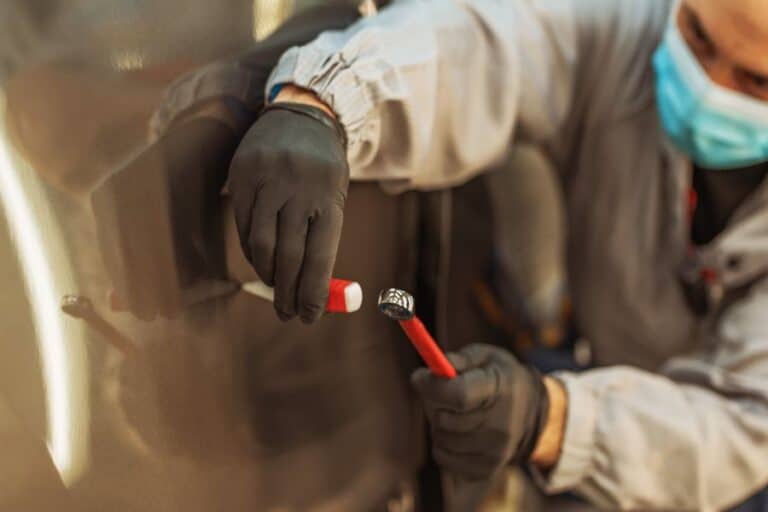
During the estimate or free estimate, the technician may explain whether trim must be removed or whether glue-pull PDR is required. Glue pulling can work well when rear access is limited, but it is more sensitive to paint condition. If the vehicle has been repainted, aggressive glue pulling can lift paint, which may push the job toward a body shop instead of paintless dent removal.
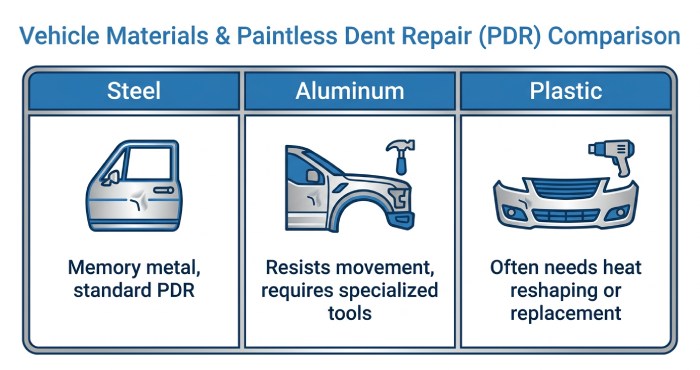
Factor #5: Type and Thickness of the Vehicle’s Metal or Panel Material
Aluminum, Steel, Plastic, and Specialty Vehicles
Aluminum panels are common on newer vehicles and require different tools, training, and pressure control. Aluminum does not have the same memory as steel, so it may resist movement and require more time. A skilled craftsman with proper training can still produce excellent repair results, but the estimate may be higher.
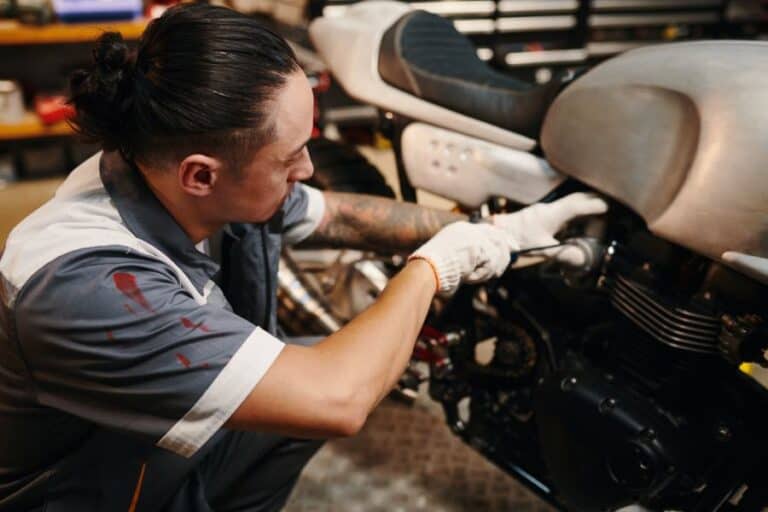
Motorcycles add another layer of complexity. A dented gas tank, motorcycle fenders, or painted fairing may require specialized access and extreme care. PDR on motorcycles is possible in some cases, but it depends on paint condition, metal thickness, and the shape of the tank or panel.
Bumper repair again differs because most bumper covers are plastic. A body shop may be the better option if the bumper is cracked, punctured, or heavily distorted. For plastic surfaces, bumper repair may involve heat reshaping, sanding, primers, paint, or replacement rather than classic paintless dent removal.
Factor #6: Length of the Crease and Extent of Metal Stretching
Reading Stretch Before the Repair Appointment
Before scheduling a repair appointment, a skilled technician studies the crease under a PDR light or reflection board. If the crease is wide, wavy, and surrounded by crowns, the panel may have significant tension. If the crease is narrow but very sharp, the center may be overstretched.
A professional repair service will be honest about expected satisfaction. Sometimes PDR can achieve a 90–95% improvement without replacing the panel. Other times, a body shop repair involving body filler and paint may be more appropriate.
Companies that emphasize eco-friendly repair often recommend PDR first because it avoids unnecessary refinishing chemicals. Compared with traditional auto body repair, PDR typically reduces waste, avoids primers and paint, and preserves the vehicle’s original factory finish.
Factor #7: Skill Level of the PDR Technician and Available Tools
Real-World Craftsmanship and Repair Quality
A skilled technician with experience in complex crease repair can help restore a vehicle’s appearance while preserving its original paint and finish. Specialized work on luxury, classic, and exotic vehicles requires careful attention to detail and an understanding of different body panel designs. High-quality paintless dent removal is often preferred because it maintains the vehicle’s original condition.
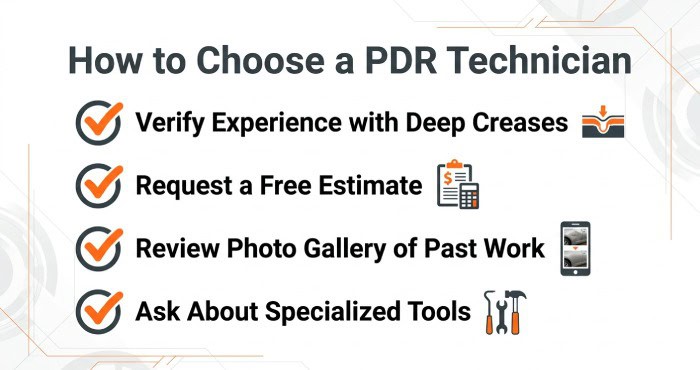
Before choosing a repair service, ask about the technician’s experience with deep creases, request a free estimate, and review a photo gallery of similar repairs. A reputable provider will explain whether paintless dent repair (PDR), paint chip repair, bumper repair, or full auto bodywork is the most suitable option. The most important factors are the technician’s skill, repair quality, and ability to deliver consistent results.
For deep creases where the paint is intact and the panel is accessible, paintless dent repair can be one of the most effective, convenient, and preservation-focused options available.
About The Author