
How Fleet Vehicles Benefit from Regular Paintless Dent Repair Maintenance
Why Fleet Vehicles Are Prone to Dents and Exterior Damage
Fleet vehicles such as delivery vans, service trucks, rental cars, utility pickups, and company vehicles face daily exposure to parking lots, loading docks, job sites, customer locations, and changing weather. As a result, small dents, door dings, and minor exterior damage are common, even with careful drivers.
Frequent cosmetic damage from shopping carts, opening doors, road debris, tools, or low-speed impacts can quickly increase maintenance costs across a fleet. Many businesses choose Paintless Dent Repair because paintless dent repair and paintless dent removal offer an efficient, cost-effective solution for repairing minor dents while helping keep vehicles looking professional.
Common Sources of Fleet Dents and Minor Collision Damage
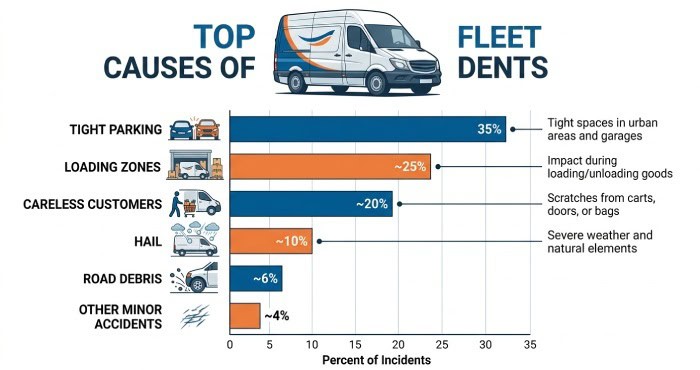
Fleet damage is often repetitive and predictable. The most common sources include tight parking spaces, loading-zone contact, car wash equipment, hail damage, careless customers, and low-speed bumper-to-body impacts. These incidents typically affect a body panel rather than the vehicle’s structure, which is why PDR, dent repair, and dent removal can be ideal solutions.
Parking Lots, Job Sites, and Loading Areas
Parking lots generate countless door dings, especially on passenger cars, vans, BMW or Mini fleet units, and branded service vehicles. Job sites can cause small dents from tools, hoses, equipment cases, or construction materials. Loading docks often produce minor collision damage that dents quarter panels, rear doors, or cargo van sides.
Damage patterns fleet managers should track
Track which routes, drivers, locations, and vehicle types produce the most minor collision damage, small dents, and door dings. This helps identify whether the issue is driver behavior, facility layout, parking practices, or routine exposure.
How Paintless Dent Repair Preserves Vehicle Value and Brand Image
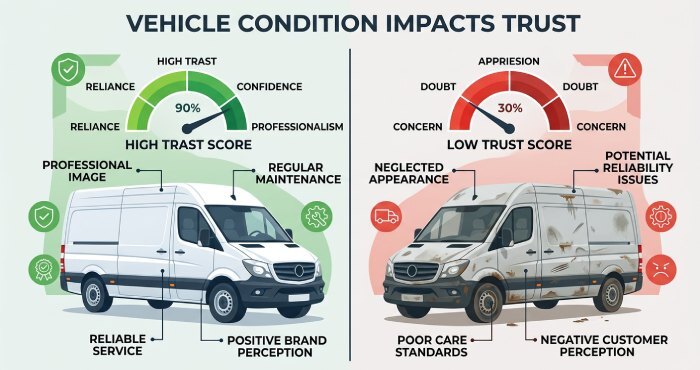
A dented fleet vehicle sends the wrong message. Whether it represents a plumbing company, medical courier, Heating, ventilation, and air conditioning systems (HVAC) contractor, food distributor, government agency, or rental brand, exterior condition affects trust. Regular paintless dent repair keeps fleet units looking professional without unnecessary repainting or heavy auto body repair.
Unlike traditional car dent repair, paintless dent removal preserves the factory finish whenever the paint is intact. That matters because original paint is often more durable and consistent than a re-painted panel. Keeping panels closer to factory spec also improves resale value, lease-return condition, and brand consistency across the fleet.
Brand Perception and Resale Value
A vehicle covered in door dings and small dents can make a company appear careless, even if its service is excellent. Routine dent removal and dent repair help maintain a clean, uniform image. For fleets with wraps, decals, or branded graphics, PDR can often correct dents without disturbing logos, provided the surface and adhesive layers are suitable.
Why Factory Finish Preservation Matters
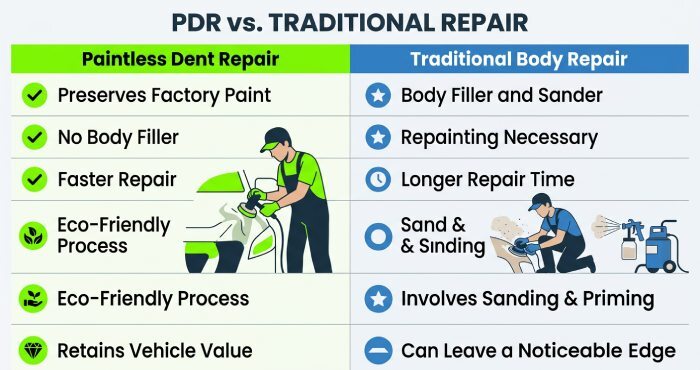
The main advantage of paintless dent repair is that it avoids sanding, body filler, primer, color matching, and repainting when the panel qualifies. Traditional auto body repair may be necessary for severe collision repair, cracked paint, torn metal, or stretched metal, but for many fleet dents, paintless dent removal is less invasive.
Skilled technicians evaluate steel panels, aluminum panels, paint condition, access points, and the depth of the dent. If there is cracking, chipping, or severe mechanical abrasion, the repair may require push to paint or push to prep, where PDR methods improve the panel before refinishing. But when paint remains intact, PDR is often the preferred damage repair path.
Cost and Time Savings Compared to Traditional Dent Repair
Downtime is expensive. A fleet vehicle sitting at a body shop is not delivering products, meeting customers, or generating revenue. Conventional auto body repair often involves disassembly, filler work, primer, paint, curing, and reassembly. By comparison, paintless dent repair and paintless dent removal can often be completed faster, sometimes as mobile service or batch maintenance.
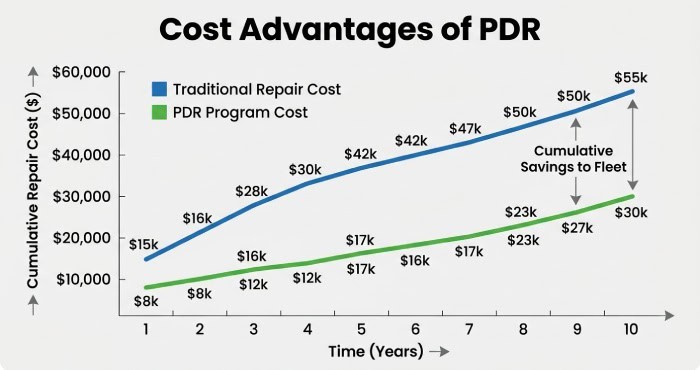
For fleet operators, this changes the economics of car dent repair. Instead of waiting until damage accumulates into a major repair order, managers can schedule routine dent removal for multiple vehicles at once. The result is lower average repair cost, less downtime, and fewer vehicles taken out of service.
When PDR Beats Conventional Auto Body Repair
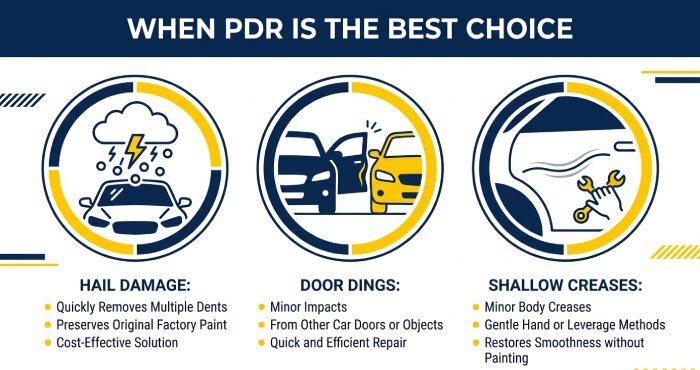
PDR is especially valuable for hail damage, door dings, shallow creases, and small dents where the paint is not broken. Traditional dent repair may still be needed when panels are sharply folded, paint is compromised, or hidden structural damage exists. The best programs use both methods appropriately rather than treating every dent the same way.
Cost-control advantages
Regular paintless dent repair reduces the need for body filler, paint materials, rental replacements, and extended shop time. It also helps prevent minor cosmetic issues from becoming larger auto body repair claims.
The Role of Regular PDR Maintenance in Fleet Safety and Longevity
Cosmetic damage can sometimes hide larger concerns. A dented panel may interfere with sensors, door operation, seals, trim fitment, or corrosion protection. Regular PDR inspections help separate simple small dents from damage that needs deeper collision repair or structural review.
Fleet longevity also depends on catching issues early. A dent on a door edge may eventually lead to paint chipping, water intrusion, or corrosion if ignored. Routine dent repair and dent removal preserve panel integrity and reduce the risk of premature deterioration.
Safety-focused inspection points
During paintless dent removal, technicians should inspect panel gaps, parking sensor areas, camera housings, trim clips, and evidence of previous auto body repair. A re-painted panel may respond differently during fixing dents, especially if adhesion is poor.
Building a Preventive Paintless Dent Repair Maintenance Plan for Your Fleet
A preventive plan should define inspection intervals, repair thresholds, vendor standards, documentation practices, and escalation rules. Many fleets inspect vehicles monthly, quarterly, or at every preventive maintenance service. High-exposure vehicles may need more frequent PDR checks.
A strong plan should include:
- A photo log of small dents, door dings, and minor collision damage
- A decision matrix for paintless dent repair, push to prep, push to paint, or conventional auto body repair
- Driver reporting procedures for hail damage and parking-lot incidents
- Batch scheduling for efficient car dent repair
- Vendor requirements for aluminum panels, steel panels, and advanced driver-assistance sensor awareness
Plastic film can protect interior trim during access, while practical shop habits—such as keeping bottled water away from electronics and lighting systems—support safe, clean work. Fleet managers should avoid relying on generic DIY kits from Amazon or Harbor Freight for professional assets; low-cost tools can cause stretched metal, high spots, or paint damage when misused.
About The Author