
9 Ways Paintless Dent Repair Saves You Money After Hail Damage
Hail can leave a clean vehicle covered in hail dents, dings, bumps, and body panel dents in minutes. The good news is that Paintless dent repair (PDR) is often the most cost-effective hail damage repair method when the paint has not cracked and the metal can be reshaped from behind or pulled externally. Compared with traditional car body repair, paintless dent repair focuses on preserving factory panels, limiting materials, and shortening the repair process.
Why Paintless Dent Repair Is a Smart Money-Saving Choice
Before choosing between a body shop alternative, a dent repair kit, or full auto body repair, start with a professional damage assessment. The right hail damage repair plan depends on the number of hail dents, their depth, panel access, paint condition, and whether the vehicle damage affects aluminum, steel, braces, or edges.
Understanding PDR, DIY Tools, and Professional Results
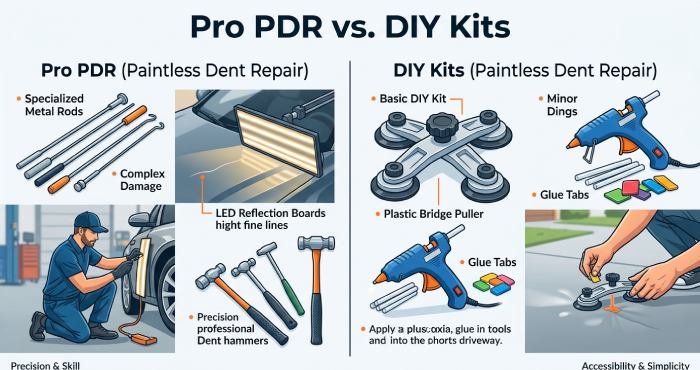
Paintless dent repair (PDR), also known as paintless dent removal, uses specialized tools, rods, glue pulling techniques, and dent pullers to restore damaged metal without affecting the factory paint. When performed correctly, PDR can effectively remove shallow creases, minor dents and dings.
DIY dent repair kits have become popular for fixing small dents at home and usually include glue tabs, a dent puller, and basic repair tools. While these kits may work for minor damage, they are generally not suitable for complex hail damage or deep dents that require professional paintless dent repair techniques.
Way #1: Preserves Your Vehicle’s Original Factory Paint
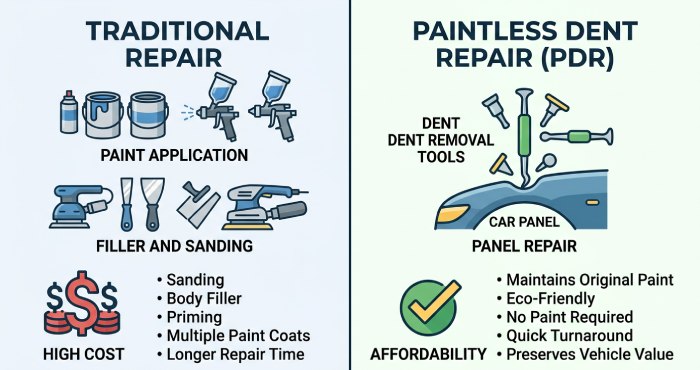
The first major way paintless dent repair saves money is by preserving original factory paint. Traditional car body repair may require sanding, filling, priming, blending, and repainting. PDR avoids that when the paint is intact.
Factory paint matters because it is baked under controlled manufacturing conditions. Once a panel is repainted, even skilled Auto Body technicians may need blending across adjacent panels. Paintless dent removal keeps your car exterior repair less invasive, which helps reduce both immediate repair expenses and future depreciation.
Way #2: Avoids the High Cost of Traditional Bodywork
Conventional auto body repair usually involves materials, fillers, paint, clear coat, masking, booth time, and more labor. Paintless dent repair avoids many of those costs. That makes PDR an affordable repair option, especially when the hail damage includes dozens of small panel dents rather than severe creases.
A dent repair kit or paintless dent repair kit can seem appealing for budget repair work, but removing dents incorrectly may stretch the metal, pull paint, or leave high spots. Professional dent removal may cost more than DIY dent repair upfront, but it can prevent rework and protect the repair outcome.
Saving on Labor, Parts, and Materials
Way #3: Reduces Labor Time and Repair Expenses
Labor is often the largest line item in hail damage repair. PDR reduces labor time because technicians use access points, leverage tools, glue pulling, and a dent puller instead of replacing or repainting parts.
A skilled technician can work through many hail dents using refined dent removal techniques. This is different from DIY dent repair, where a novice may spend hours experimenting with a dent repair kit and still get uneven repair results. A step-by-step guide can help, but professional PDR requires reading reflection lines, pressure points, and metal movement.
The less time spent in repair, the more you save on rental cars, downtime, and shop charges.
Way #4: Helps Maintain Your Car’s Resale Value
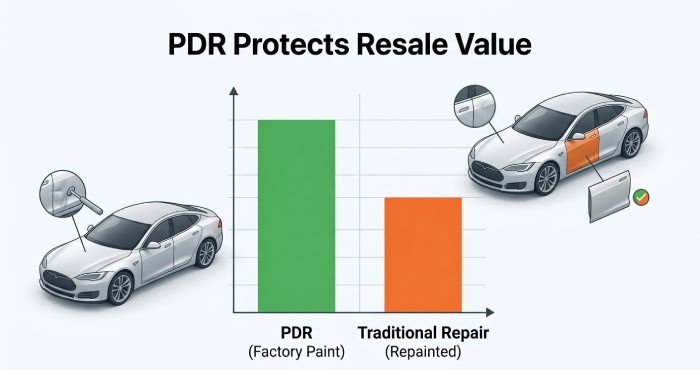
Buyers, dealers, and appraisers often look closely at repaint history. A vehicle with original panels and factory paint generally has stronger resale value than one with obvious paintwork. Paintless dent repair supports value preservation because it corrects hail dents without adding filler or paint.
This is especially important for late-model vehicles, luxury cars, collector vehicles, and even exotic examples like a Bugatti Chiron, where originality affects market confidence. From a buyer’s POV, clean PDR repair results are usually more desirable than traditional car body repair records.
Way #5: Minimizes the Need for Replacement Parts
Replacing hoods, roof skins, trunks, moldings, and door panels can quickly make hail damage repair expensive. PDR minimizes replacement parts by restoring the original panel whenever possible.
This is where professional damage assessment matters. Some body panel dents are too sharp or stretched for perfect paintless dent removal, but many hail dents can be repaired without ordering new parts. That means fewer delays, fewer shipping costs, and fewer complications with aftermarket fitment.
Avoiding Paint Problems and Rework
Way #6: Lowers the Risk of Mismatched Paint or Rework
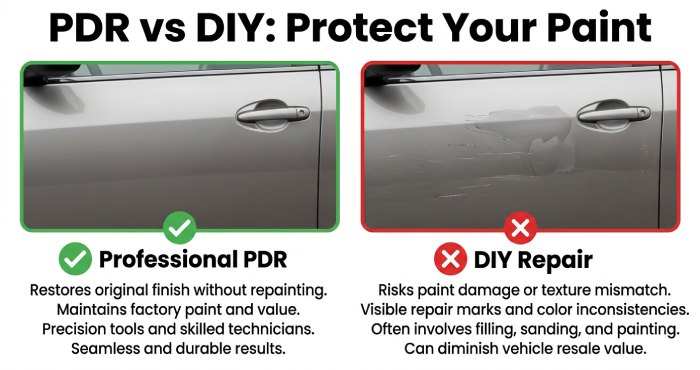
Paint matching can be difficult because factors like sunlight, aging, and factory paint variations affect color. Paintless dent repair (PDR) avoids repainting, helping preserve the original finish.
DIY dent repair with a dent repair kit can damage the paint if done incorrectly. Professional paintless dent removal reduces these risks and helps save money on repairs over time.
Way #7: Gets You Back on the Road Faster
Time is money. Traditional car body repair can take days or weeks, especially after a large hail event when shops are overwhelmed. PDR often shortens the repair process because it eliminates paint curing, extensive masking, and major parts replacement.
For drivers juggling work, family, or business use, faster dent removal means fewer rental fees and less disruption. A professional PDR technician may complete minor hail dents in a much shorter timeframe than a conventional body shop.
Insurance, Prevention, and Long-Term Savings
Way #8: Works Well With Insurance Claims for Hail Damage
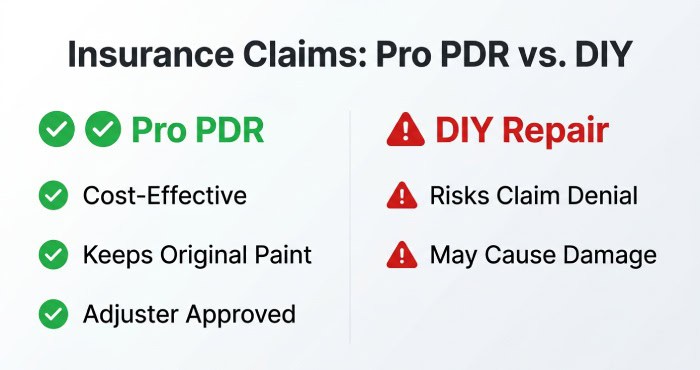
Insurance companies often prefer paintless dent repair (PDR) for hail damage because it costs less than traditional auto body repair while preserving the original paint. A professional shop can document the damage and provide a clear assessment for the insurance adjuster.
Before attempting DIY dent repair, check whether your insurance coverage includes professional hail damage repair. Using a dent repair kit before the inspection may affect your claim if it causes additional damage.
Way #9: Prevents Small Hail Dents From Becoming Bigger Problems
Small bumps and dings may seem cosmetic, but ignoring them can hurt resale value and make future car body repair more expensive. Hail dents on horizontal panels are highly visible, and accumulated damage can make a vehicle look poorly maintained.
Paintless dent removal helps you correct minor panel dents before they become part of a larger repair history. It is also a smart car maintenance decision because it keeps the exterior in better condition without unnecessary repainting.
About The Author