
What Happens Beneath a Car Dent? The Hidden Damage Explained
The Visible Dent vs. the Damage You Can’t See
A dent may look like a simple cosmetic flaw, but beneath the surface it can involve stretched metal, fractured paint layers, weakened protective coatings, or even internal panel stress. A small Door Ding from a parking lot, a sharp crease from Debris Damage, or widespread Storm Damage from hail can all affect more than the outer skin of the vehicle.
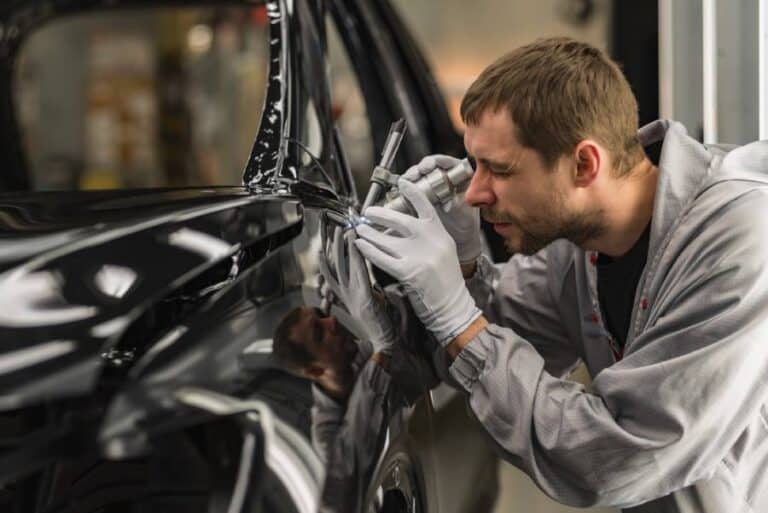
This is why professional Car Dent Repair is not just about making the panel look smooth again. Proper Auto Dent Repair begins with understanding how the impact traveled through the panel and whether the damage is limited to the surface or connected to deeper issues. A reputable Body Shop or Auto Body Shop will evaluate the dent location, depth, paint condition, and panel access before recommending Dent Removal, Paintless Dent Repair, PDR, or Traditional Dent Repair.
For drivers comparing repair options, this guide to Car Dent Repair explains why early assessment can protect Vehicle Value, Resale Value, and the vehicle’s Factory Finish.
Why even a small Door Ding matters
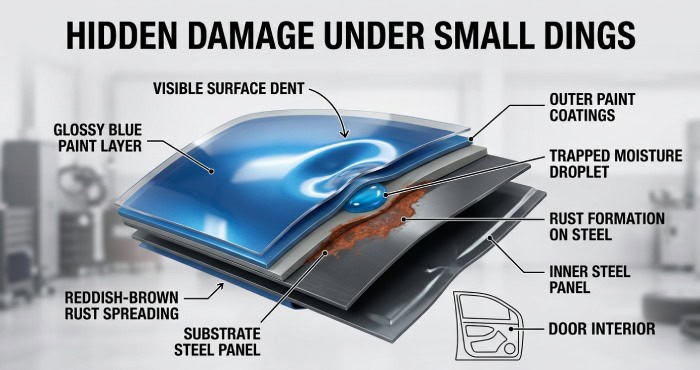
A small Door Ding may seem harmless, but it can trap moisture and lead to hidden paint damage or rust over time. Scheduling a professional dent inspection helps determine whether simple dent removal is enough or if additional repair is needed.
How Impact Affects Paint, Metal, and Protective Coatings
When a panel is struck, the force affects multiple layers: clear coat, color coat, primer, corrosion-resistant coating, and sheet metal or aluminum. In Minor Dents, the paint may flex with the metal and remain intact. In Large Dents, sharp impacts, or Body Creases, the paint may crack, separate, or lose adhesion.
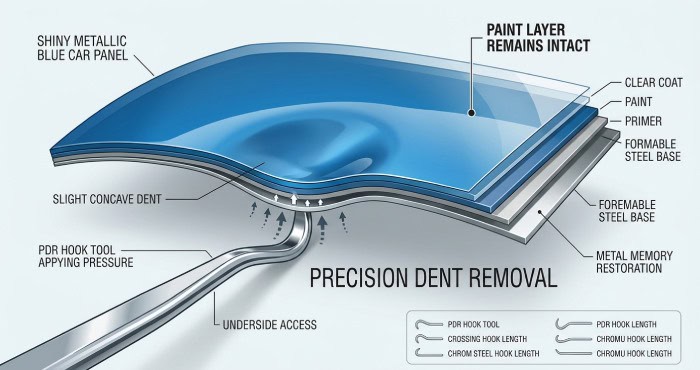
Paintless Dent Repair is often ideal when the Original Paint is intact because PDR uses Specialized Tools to gently massage the panel back into shape from behind the damage. This method supports No Repainting, No Fillers, and a more Seamless Restoration than refinishing-based methods. Professional Paintless Dent Removal can be especially effective for Hail Damage Repair, Auto Hail Repair, Door Ding correction, and many forms of Cosmetic Auto Repairs.
What happens to the metal beneath the surface
Modern vehicle panels require precise Dent Removal to restore their original shape without causing distortion. Skilled technicians for Paintless Dent Repair carefully relieve pressure across the damaged area, ensuring a smooth finish while preserving the factory paint through quality workmanship.
Why paint condition determines repair options
If the paint is flexible and undamaged, PDR can preserve the Original Paint and reduce repair time. If the paint is chipped, split, or already failing, Traditional Dent Repair may be necessary. That may include sanding, filler, primer, color matching, refinishing, and blending adjacent panels.
The role of protective coatings
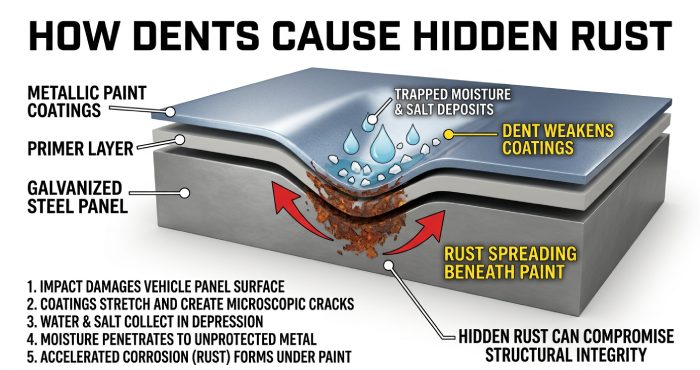
Protective coatings help prevent rust, but impact can fracture them invisibly. Even if the outer paint looks acceptable, broken primer or damaged e-coat underneath can expose metal to moisture. This is why a professional Body Shop will inspect the dent under proper lighting and may recommend Auto Body Repair if corrosion protection has been compromised.
Hidden Structural and Alignment Issues After a Dent
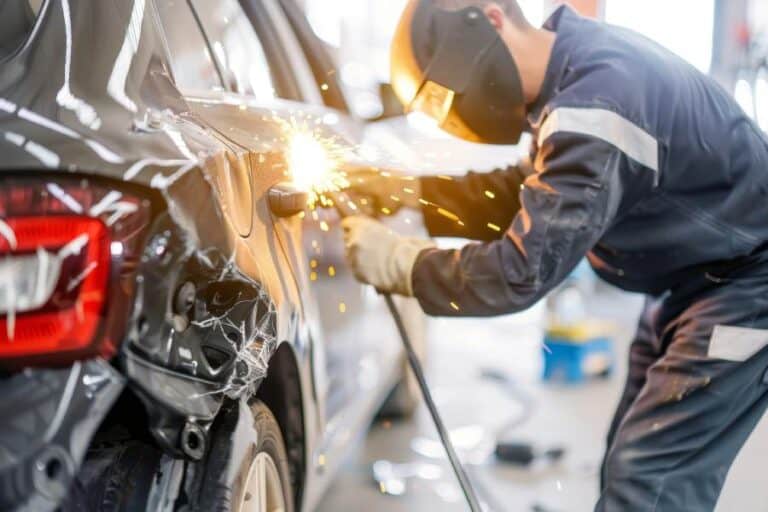
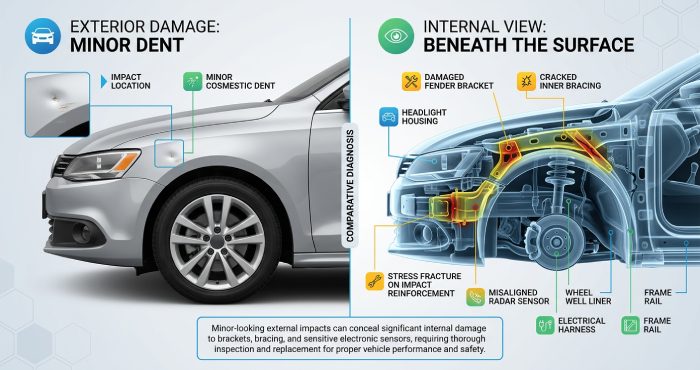
Not all dents are isolated to exterior panels. Damage near bumpers, wheel openings, door edges, pillars, rocker panels, or quarter panels can transfer force into brackets, sensors, clips, seams, and structural areas. After Collision Damage, a dent may indicate deeper problems that require Collision Repair, not just surface Dent Removal.
For example, a dented fender may affect the gap between the hood and door. A dent near a rear quarter panel may involve inner bracing. A sharp crease near a body line may suggest panel stress that simple Mobile Dent Repair cannot fully correct. In these cases, a Body Shop offering Auto Body Repair and Collision Repair can inspect alignment, mounting points, and hidden reinforcement areas.
When a dent points to collision-related damage
Parking lot scrapes or minor collisions can cause hidden damage beyond surface dents. If panels are misaligned, doors stick, or sensors malfunction, professional Collision Repair and Auto Body Repair may be needed, with many shops providing insurance assistance and repair estimates to simplify the process.
Why Moisture, Rust, and Corrosion Can Develop Over Time
Dents create pockets where water, road salt, and contaminants can collect. In areas like wheel arches, lower doors, rocker panels, and trunk edges, moisture can sit longer than expected. If the paint or internal coating has been compromised, rust can begin beneath the surface before it becomes visible.
This is especially important after Hail Damage Repair, because hail often creates dozens or hundreds of small impact points across the hood, roof, trunk, and upper rails. Even when hail dents seem shallow, delaying Auto Hail Repair can reduce Vehicle Value and make later Vehicle Restoration more expensive. A Cost-Effective repair today may prevent larger Auto Body Repair needs later.
When to Choose Paintless Dent Repair or Traditional Car Dent Repair
Choosing between Paintless Dent Repair and Traditional Dent Repair depends on paint condition, dent size, panel access, depth, location, and whether structural damage is present. For many Minor Dents, hail dents, and shallow dings, Paintless Dent Repair is the preferred option because it preserves the Original Paint, allows Quick Turnaround, avoids No Repainting and No Fillers, and can be more Cost-Effective than refinishing.
PDR is commonly used for Hail Damage Repair, Door Ding repair, Ding Removal, and everyday Auto Dent Repair. It is also valuable when owners want Fast Repairs, a cleaner Factory Finish, and minimal disruption. Depending on the damage type and repair requirements, Gem State Dent Repair evaluates whether Paintless Dent Repair is the right solution for your vehicle. Our professional dent repair process focuses on restoring damaged panels while preserving the vehicle’s original paint whenever possible.
When PDR is the right fit
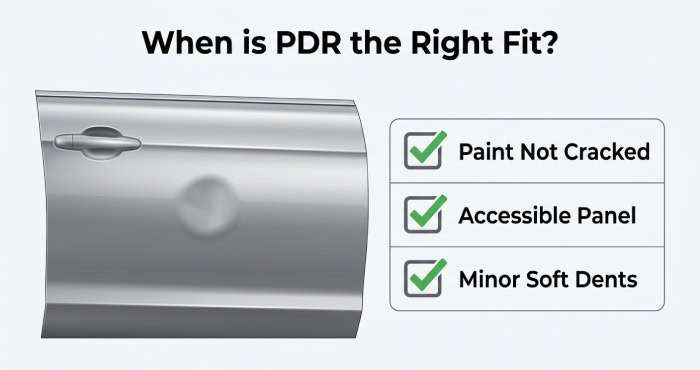
PDR is usually recommended when:
- The paint has not cracked or chipped
- The dent is accessible from behind the panel
- The metal is not severely stretched
- The damage involves Minor Dents, hail dents, or soft creases
- The owner wants Seamless Restoration with minimal refinishing
In these cases, Certified Technicians use lighting, reflection boards, glue-pulling systems, rods, tabs, and other Specialized Tools to restore the panel. Experienced PDR technicians use specialized tools and techniques to restore the panel while maintaining the vehicle’s original appearance.Techniques to restore the panel while maintaining the vehicle’s original appearance.
When Traditional Dent Repair is necessary
Traditional Dent Repair is recommended for large dents, cracked paint, deep creases, collision-related damage, or panels that require refinishing or replacement. In these situations, the repair process may involve panel restoration, paint matching, refinishing, and additional bodywork to return the vehicle to its original condition. A professional dent assessment helps determine the most effective repair approach based on the severity and location of the damage.
About The Author