Car Dent Repair Guide: How To Fix Small Dents Without Repainting
Small car dents can give a vehicle an aged appearance, yet numerous small imperfections can often be fixed without needing a new paint job. By using appropriate tools and straightforward methods, car owners can repair the panel while preserving the original finish. This guide outlines effective and safe techniques for addressing small dents.
Evaluate First, Then Act
Assessing the Dent: Can It Be Fixed Without Repainting?
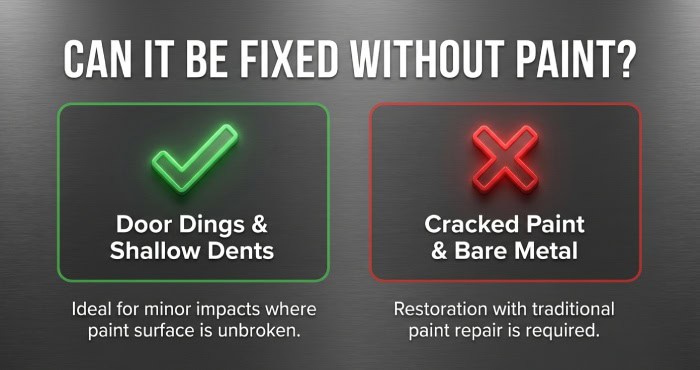
Before any car dent repair starts, verify that the paint surface is intact. If there’s no cracked paint, flaking clearcoat, orexposed bare metal, the dent likely qualifies for paintless dent repair (PDR). Typical candidates include door dings, soft hail dents, and broad, shallow impressions in steel or aluminum panels. Creases that run to panel edges, sharp impact points, or metal that looks stretched may be harder to remove dents cleanly with DIY dent repair alone.
Quick checks:
- Light the panel from an angle and use a reflection board or a straight object to read the distortion. Professional PDR technicians and shops such as Legacy Dent Co. do this to judge metal memory.
- Slide a finger lightly across the area. If you feel an edge where the paint has lifted or chipped, you’re in car paint repair territory. Exposed bare metal requires sealing; leaving bare metal unprotected invites corrosion.
- Note panel type. Thicker steel is often more forgiving; aluminum is workable with PDR but can spring differently. As analyst Bozi Tatarevic often reminds DIYers, knowing substrate behavior helps you fix car dents without creating highs or cracking paint.
If paint is already broken or you see bare metal, you can still remove dents first with PDR methods to minimize filler thickness later. But understand you may need body filler, glazing putty, sanding, and possibly spray paint afterward. Those steps fall under traditional auto body repair and bodywork rather than pure PDR.
Gear Up the Right Way
Tools, Materials, and Safety Prep for Paintless Dent Repair
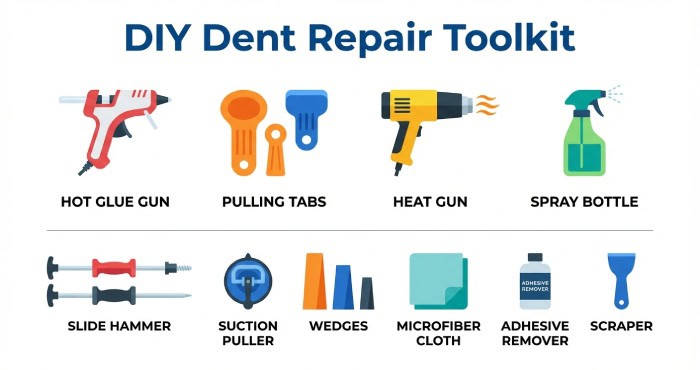
For successful DIY dent repair, assemble dent removal tools that protect the finish while letting you manipulate the metal gradually.
Essentials:
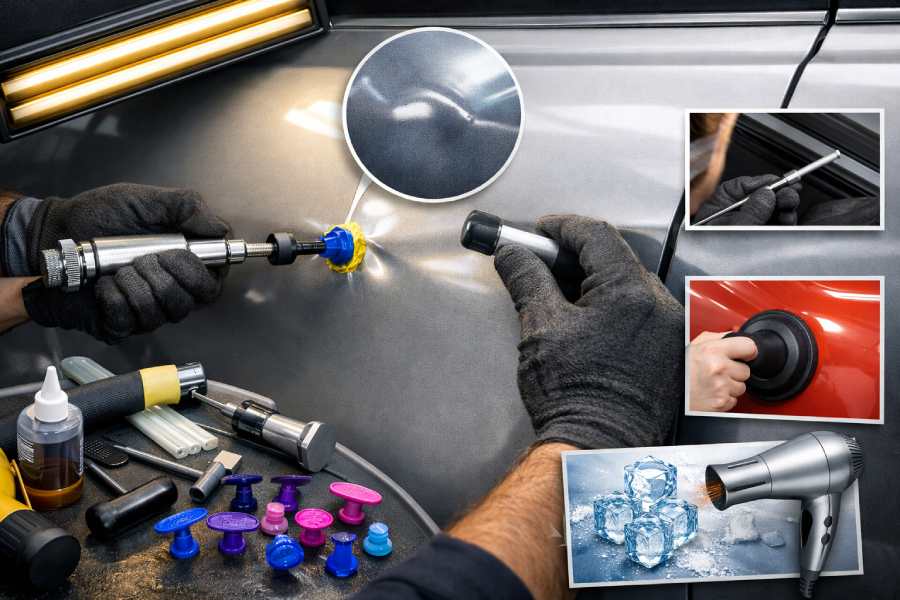
- Glue-pull kit: tabs of different shapes, PDR-safe hot glue sticks, a glue gun, alcohol for release, a bridge or mini lifter dent pulling tool, and a tap-down with interchangeable tips.
- Optional PDR rods and whale tails if you have interior access (some bumper and door structures allow push-from-behind).
- Heat gun or hair dryer to warm panels in cold weather; this reduces paint brittleness during dent removal.
- Cleaning tools: microfiber towels, isopropyl alcohol, automotive-safe degreaser, and Soapy Wooder or similar car shampoo to start with a clean surface.
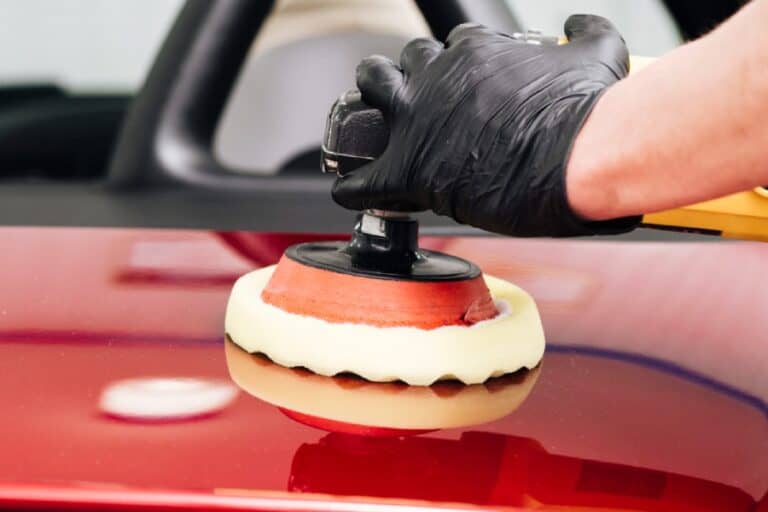
- Finishing: compound, polish, microfiber or foam pads, and a dual-action polisher for light paint correction after you remove dents.
- Personal protection: gloves, eye protection, and good ventilation when using chemicals.
Where to source:
- Amazon dent repair tools range from cheap dent repair products (e.g., VABUB pullers) to higher-quality kits. Check YouTube reviews from creators like ChrisFix, MasterOfNone, and Stoney Ridge Farmer for mechanic tips and demonstrations.
- Advance Auto Parts stocks glue sticks, alcohol, tap-down tips, and, if needed later, high quality body filler and glazing putty.
- You can also shop ChrisFix store links and merch at Bunker Branding Co.; many creators list vetted kits on their Facebook, Twitter, and Instagram profiles.
Panel preparation checklist
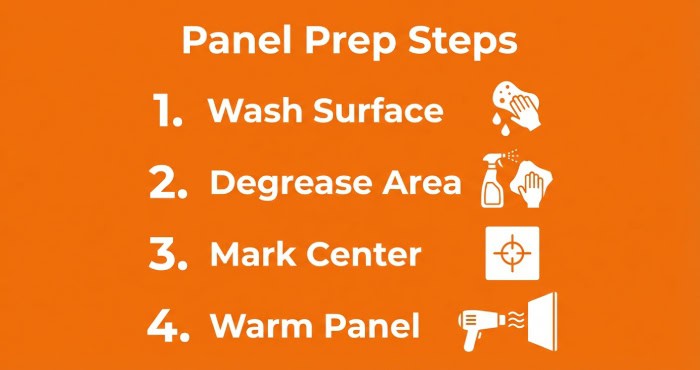
- Wash, decontaminate, and dry. Proper body panel preparation prevents pulling contaminants into the glue joint.
- Degrease with isopropyl alcohol where the tab will sit and on the back of the tab—prepare panel surfaces so glue bonds consistently.
- Mark dent center with a removable wax pencil to speed up accurate pulls.
- Warm the panel slightly if it’s cold; cold paint chips more easily. Good panel preparation is the cheapest insurance in DIY auto repair.
Methods That Preserve Paint
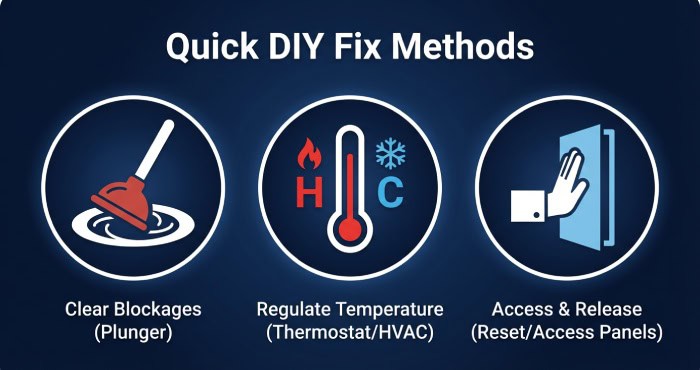
Quick DIY Methods for Small Dents (Plunger, Heat/Cold, Bumper Push-Outs)
- Plunger method: For broad, shallow dents on flat panels, moisten a clean plunger and gently tug. This can remove dents that aren’t sharply creased. It’s a classic fixing dents at home trick you’ll see on YouTube, though results vary.
- Heat/cold approach: Warm the area with a hair dryer, then apply a blast of compressed air (held upside down for a cooling effect). The rapid contraction can pop small door dings. Use moderate heat to avoid damaging clearcoat during car dent repair.
- Bumper push-outs: On many plastic bumper covers, you can access the backside. Remove a trim panel, then massage from behind with a gloved hand or a rounded tool. Gentle, even pressure helps remove dents without marring paint. Don’t overheat plastic; gradual warming works best.
These quick methods are best for light impressions. If the dent resists or reappears, transition to PDR glue pulling for controlled dent removal.
Step-by-Step: Using a Glue-Pull Kit to Remove Dents Without Paint Damage
1. Clean the area: Degrease the dent center and surrounding paint. Panel preparation affects pull quality more than almost anything else in DIY dent repair.
2. Select a tab: Match tab shape to dent. For small door dings repair, use a small round tab; for ovals or soft creases, a longer tab increases grip.
3. Apply glue: Load the glue gun and place a uniform spiral on the tab. Too little glue reduces holding power; too much can smear.
4. Place the tab: Set it centered on the low. Let the glue set for 30–60 seconds—longer in cool weather.
5. Pull gently: Attach the mini lifter or bridge dent pulling tool and apply gradual pressure. The goal is to lift the low slightly, not yank it high.
6. Knock down highs: Use the tap-down to level any crowns that appear. PDR is an iterative process: pull a bit, check, then knock down highs.
7. Release and repeat: Remove the tab with alcohol, reassess with a reflection, and repeat until the panel reads flat.
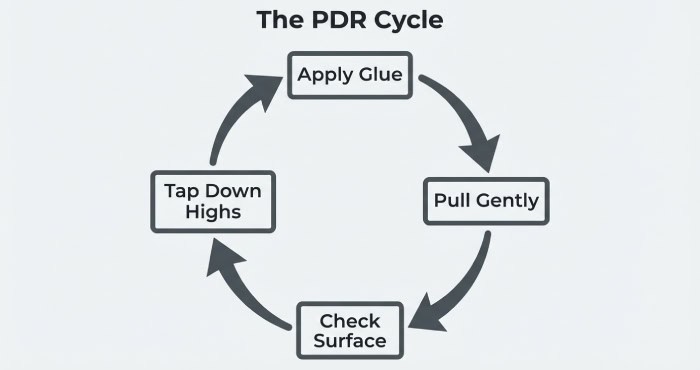
Pro tip: Resist the urge to start sanding. True PDR avoids sanding the paint entirely. Sanding is reserved for situations where paint is already damaged and you’re switching to body filler and glazing putty. If you do plan to paint later, you can finish PDR first to minimize the amount of body filler, reduce filler sanding time, and limit spray paint use during blending.
About The Author