

7 Key Factors Technicians Evaluate Before Choosing an Auto Hail Repair Method
Auto hail damage can vary significantly depending on the size of the hailstones, impact force, vehicle construction, and condition of the paint. While some dents can be repaired through paintless dent repair (PDR), others require conventional auto body repair. Before recommending a solution, technicians evaluate several factors to determine the most effective approach.
Understanding these considerations helps vehicle owners make informed decisions about auto hail repair while protecting their vehicle’s original finish and appearance.
Factor #1: Metal Stretching and Dent Deformation
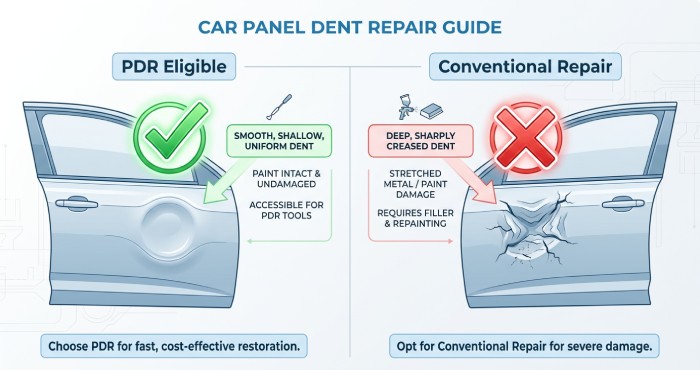
One of the first things technicians evaluate is how much the metal has stretched or changed shape following a hail impact. Small, shallow dents that retain their original metal structure are generally good candidates for paintless dent repair.
However, deeper impacts can stretch the metal beyond its natural flexibility. When this happens, the body panel may develop sharp creases, raised edges, or irregular depressions that are more difficult to correct. Excessive stretching can also make it challenging to restore the original panel contour.
PDR technicians examine each dent’s depth, shape, and surrounding metal condition before determining repair eligibility. If the metal can be carefully reshaped without compromising its structure or paint, PDR may provide an effective solution. Severely deformed panels may require conventional repair methods.
Factor #2: Accessibility Around Roof Rails, Pillars, and Bodylines
The location of hail damage determines how easily technicians can reach the affected area. Large, open surfaces such as hoods, doors, trunks, and roof panels often provide better access for paintless dent removal.
However, dents near roof rails, pillars, window edges, and reinforced sections can present additional challenges. These areas often contain internal supports, structural reinforcements, wiring, or other components that restrict access to the backside of the panel.
Technicians evaluate available access points and determine whether specialized PDR tools can reach the damaged metal. Bodylines also require careful attention because they influence the vehicle’s original shape and appearance.
In situations where traditional pushing techniques are difficult, glue-pulling methods may help remove certain dents from the exterior. The appropriate technique depends on panel construction, paint condition, and dent severity.
Factor #3: Factory Paint Adhesion and Clear-Coat Integrity
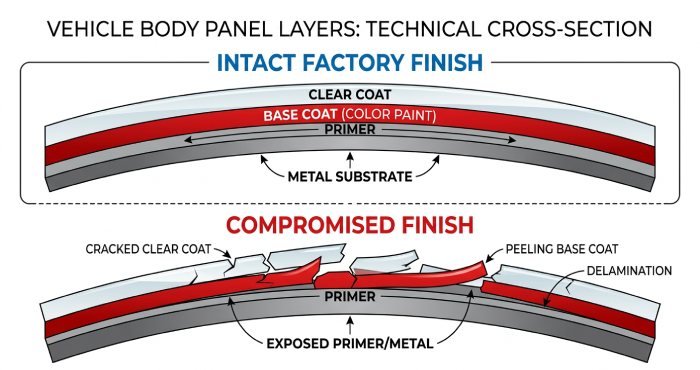
Paint condition is another important consideration when selecting an auto hail repair method. Paintless dent repair works best when the original factory paint remains properly bonded to the metal and has not developed cracks or other damage.
Technicians inspect the clear coat, paint surface, and underlying finish to identify potential problems. Previous repainting is also important. Refinished panels may have different paint thicknesses, adhesion levels, or material characteristics compared with factory-painted surfaces. These differences can affect how much pressure a panel can safely tolerate during PDR.
When the original finish is intact and securely bonded, paintless dent repair can preserve the factory appearance without sanding, body filler, or repainting. If the finish is compromised, conventional refinishing may be necessary.
Factor #4: Steel, Aluminum, and Composite Panel Construction
Vehicle manufacturers use different materials to balance strength, weight, performance, and fuel efficiency. Steel, aluminum, and composite panels each respond differently to dent removal techniques.
Steel panels generally provide good flexibility for paintless dent repair when the damage is not severe. Aluminum panels are often more challenging because they behave differently under pressure and may have less flexibility during reshaping. They typically require specialized tools and carefully controlled techniques.
Composite panels introduce additional considerations because their construction and repair limitations vary depending on the material. Some composite components cannot be repaired using traditional metal reshaping techniques.
Technicians identify the panel material before selecting their approach. They also consider its thickness, curvature, reinforcement, and existing condition to avoid unnecessary damage during the repair process.
Factor #5: Hail-Dent Distribution and Panel-by-Panel Repair Planning
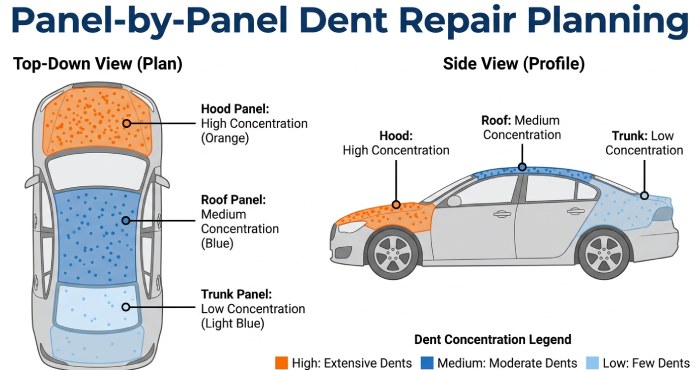
The number and distribution of hail dents across a vehicle directly influence repair scheduling and labor requirements. A vehicle with several isolated dents requires a different repair plan than one with hundreds of impacts spread across multiple panels.
During an inspection, technicians examine the hood, roof, trunk, doors, quarter panels, and other affected areas. They document dent locations, estimate the repair workload, and determine which panels require the most attention.
Closely clustered dents may require additional time because technicians must carefully restore the surrounding metal without creating additional imperfections. Damage across several panels may also require a more organized repair schedule.
Panel-by-panel planning helps technicians prioritize heavily damaged areas, estimate completion time, and coordinate the necessary tools and repair techniques. For car dealerships and fleet operators, mobile dent repair can also help manage multiple vehicles while reducing unnecessary transportation and downtime.
Factor #6: Vehicle Condition, Previous Damage, and Insurance Estimates
A vehicle’s overall condition plays an important role in determining the appropriate hail damage repair method. Technicians inspect the vehicle for existing dents, previous bodywork, rust, fading paint, and other damage that could affect repair results.
For example, a panel with previous filler or repainting may not respond to PDR in the same way as an undamaged factory-finished panel. Older corrosion or weakened metal can also limit the effectiveness of paintless dent removal.
Insurance estimates and insurance claim documentation are another consideration. Technicians may document affected panels, dent severity, repair requirements, and supporting photographs to help establish the necessary repair scope.
Comparing the vehicle’s existing condition with the new hail damage helps prevent confusion during the estimation process. It also allows technicians to recommend appropriate repairs without including unnecessary work.
Factor #7: Specific Conditions Requiring Conventional Auto Body Repair
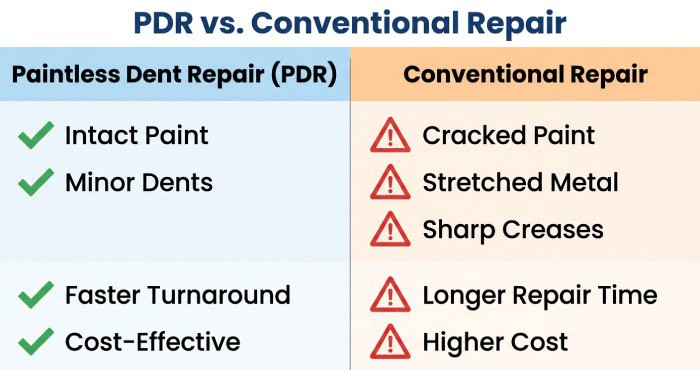
Although paintless dent repair is effective for many hail-related dents, certain conditions make conventional auto body repair necessary.
These include severely stretched metal, sharp creases that cannot be safely reshaped, cracked or missing paint, extensive corrosion, and panels with significant previous bodywork. Structural damage and compromised car components also require appropriate repair procedures beyond cosmetic dent removal.
Conventional repair may involve panel reshaping, body filler, sanding, priming, and repainting to restore the damaged area. In cases involving severely damaged panels, replacement may also be considered.
Skilled technicians evaluate whether the panel can be restored safely and effectively using PDR or whether more extensive work is required. The objective is to achieve a durable repair while maintaining the vehicle’s appearance and structural integrity.
About The Author


