
What Happens If You Wait Too Long to Repair Hail Damage?
Why Hail Damage Should Never Be Ignored
After a hail storm, it is easy to dismiss small dents as cosmetic, especially if the vehicle still drives normally. But delaying auto hail repair can turn a manageable hail damage repair into a more expensive problem involving paint failure, corrosion, glass replacement, or even panel replacement. Hail impacts often create multiple dents across the hood, roof, trunk, rails, and doors, and what looks minor from a distance may require a professional damage evaluation.
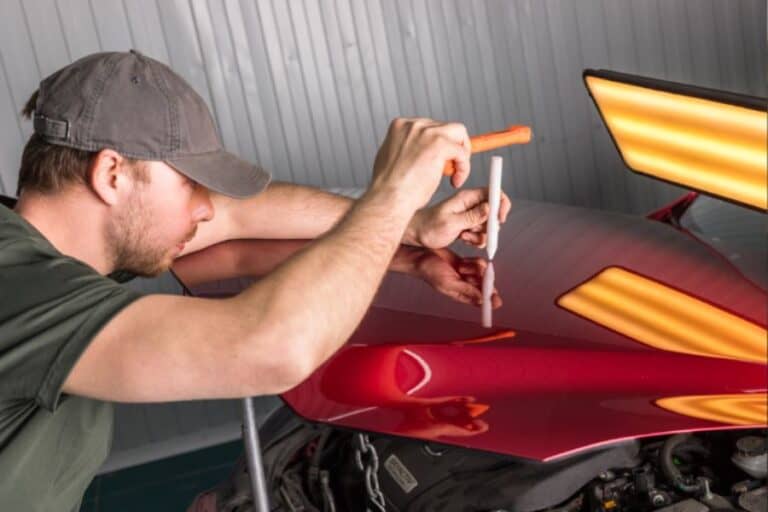
Modern hail damage repair is not just about appearance. A proper vehicle inspection documents damage panel by panel, identifies cracked paint, checks trim and moldings, and determines whether paintless dent repair is possible. Paintless dent repair (PDR) is often the preferred method because it restores the metal without repainting, preserves the original paint, and can support a fast turnaround when handled by skilled technicians using state of the art tools.
Hidden Damage Can Be Easy to Miss
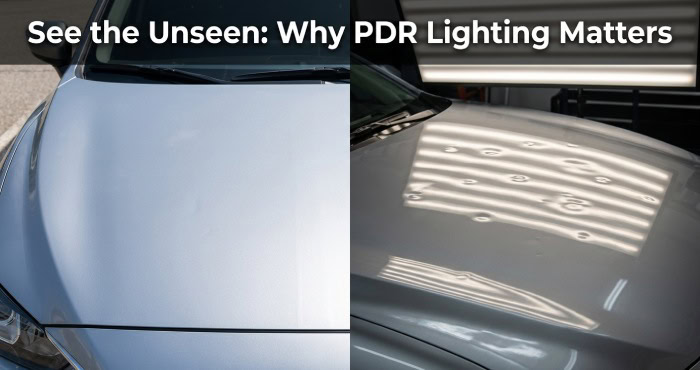
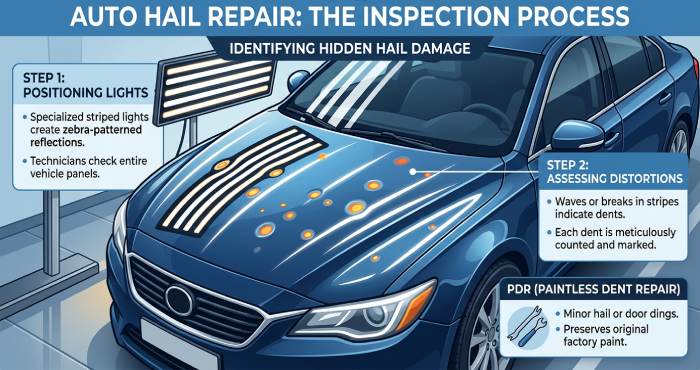
Hail damage can include shallow dents, stretched metal, chipped paint, cracked windshields, broken mirrors, and damaged roof rails. PDR technicians often use special lighting to reveal dents that are invisible in normal daylight. This is why a free estimate from a reputable collision center, preferred shop, or direct repair facility is important before deciding to wait.
Why Professional Dent Removal Matters
Professional dent removal restores the contour of the panel without unnecessary body work when PDR is appropriate. Waiting too long can make dent removal more difficult if paint begins to split or rust forms around impact points.
How Delayed Repairs Can Lead to Rust, Paint Damage, and Structural Issues
The biggest risk of postponed hail damage repair is corrosion. When hail chips clear coat or cracks the paint surface, moisture can reach bare metal. Over time, that moisture causes rust, especially on horizontal panels like the roof, hood, and trunk. Once rust begins, paintless dent repair may no longer be enough, and the repair process may require sanding, refinishing, parts replacement, or panel replacement.
Paint Damage Often Gets Worse Over Time
Hail dents can stress factory paint. Even if the paint appears intact, the impact may have weakened the finish. Heat, UV exposure, road salt, and washing can expand tiny cracks. Once the original paint is compromised, the vehicle may need conventional body work instead of PDR.
Rust Can Affect Repair Time and Cost
Early auto hail repair usually means shorter repair time, lower cost, and a better chance of preserving factory standards. Delayed hail damage repair can mean more labor, more materials, and more coordination with your insurance company for repair approval.
Severe Cases May Require More Than PDR
If rust, sharp creases, or broken paint are present, PDR may not be the only solution. A technician may recommend glass replacement, windshield replacement, refinishing, or structural checks depending on the damage report.
The Impact of Waiting on Insurance Claims and Repair Costs
Most hail damage is considered an act of God and is typically handled under comprehensive coverage, not collision coverage. If you carry comprehensive coverage, your insurance claims may pay for auto hail repair minus your deductible. However, delaying the claim process can create complications with your insurance company, especially if another storm occurs or if damage becomes harder to separate from wear and tear.
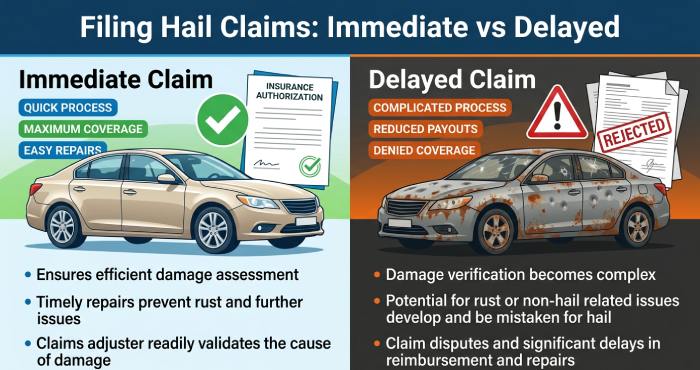
A timely estimate helps create a clear claim worksheet for the insurance adjuster. The adjuster or repair facility may use matrix pricing to calculate dent removal costs based on dent size, quantity, and location panel by panel. If you wait months, the insurance company may question whether all damage came from the same hail storm.
Deductibles, Supplements, and Approval
Your deductible is the amount you pay before comprehensive coverage applies. In many cases, the deductible is far less than the full cost of hail damage repair. Once the insurance adjuster completes the inspection, the shop can request supplements if hidden damage is found during the repair process. Delays may slow repair approval and increase out-of-pocket exposure.
Working With the Right Insurance Partner
Shops that regularly handle insurance claims understand documentation, photos, supplements, and communication with all insurance companies. Whether the carrier is State Farm Insurance or another insurance company, choosing a preferred shop or direct repair facility can simplify the claim process.
How Hail Damage Affects Vehicle Value, Safety, and Resale Potential
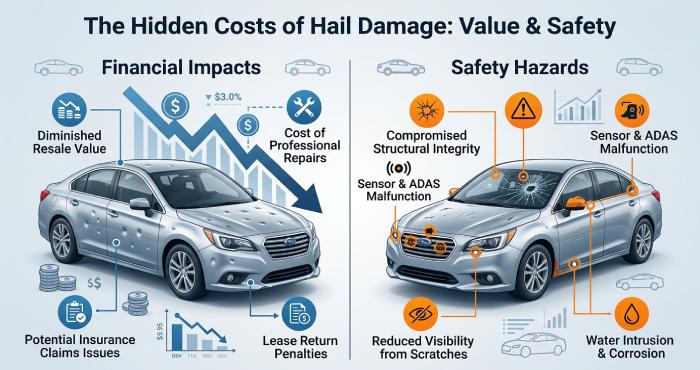
Unrepaired damage lowers car value. Buyers notice dents, dealers reduce trade-in offers, and reports from services such as Carfax may show prior hail-related insurance claims. Even if the vehicle is mechanically sound, visible hail damage repair needs can reduce resale confidence.
Safety can also be affected. Cracked glass, compromised mirrors, damaged sensors, or roof dents near structural reinforcements should be inspected promptly. A windshield replacement may be necessary if hail has caused cracks that interfere with visibility or advanced driver-assistance systems.
Resale Buyers Look for Quality Repairs
A high-quality auto hail repair using paintless dent repair helps protect resale potential because it keeps the original paint intact. PDR is often preferred over repainting because factory paint is durable, consistent, and valuable to future buyers. A lifetime warranty on PDR work also supports customer satisfaction and reassures the next owner that the repair was performed correctly.
Warranty and Documentation Matter
Ask whether the shop provides a lifetime warranty on dent removal and whether that lifetime warranty covers workmanship for as long as you own the vehicle. Documentation, before-and-after photos, and a final damage report can help prove that hail damage repair was completed to factory standards.
When to Schedule Auto Hail Repair and What to Expect from the Process
Schedule auto hail repair soon after a hail storm to prevent delays and document the damage. Most repair shops provide a free estimate, inspect the vehicle under specialized lights, assess insurance coverage and repair options, and determine whether paintless dent repair (PDR) can restore the dents. If the damage includes cracked glass, broken trim, or chipped paint, the repair plan may also include parts replacement or conventional body repairs.
Convenience Options Can Reduce Downtime
Many hail specialists offer mobile dent repair, rental car coordination, and pick up and delivery for added customer convenience. Some companies operate multiple repair locations to help customers get a fast turnaround after widespread storms. Businesses such as AutoHailDent.com, What The Hail, Midwest Auto Dent Repair, Indianapolis Auto Spa, and Central Florida Dent and Ding Mobile Repair are examples of hail-focused providers customers may encounter in different markets.
About The Author