Dent Repair: Restore Your Car’s Look Without the High Cost
Dings and dents can give even the best-kept vehicle an aged appearance but you don’t need to spend a fortune to repair them. Today’s advanced dent repair methods, such as paintless dent removal, allow you to restore your car’s sleek, original look swiftly and cost-effectively. In this guide, we’ll explain the dent repair process, outline the expenses involved, and show you how to rejuvenate your car’s appearance without the hefty dealership fees.
Why Dent Repair Matters and How It Works
Although scuffs, dings, and dents might seem superficial, addressing them promptly can safeguard your vehicle’s worth, avoid rust, and ensure accurate alignment of ADAS sensors. Paintless dent repair (PDR) can frequently restore the exterior by gently reshaping the metal without the need for sanding, fillers, or repaints, thus keeping the original finish intact. However, when paint is compromised or metal is stretched, traditional body shop repairs are the preferred choice, making it crucial to choose the appropriate repair method for optimal results.
The Real Cost of Dents: Why and When to Repair
- Financial impact: Unaddressed car dents lower resale value and can trigger lease-end penalties. Even minor body damage can look like poor maintenance to buyers and insurers.
- Structural and corrosion risks: Dents can chip coatings, leading to paint damage and moisture intrusion. On aluminum panels and steel panels alike, untreated creases can worsen, especially with temperature swings and road salt.
- Technology concerns: Modern motor vehicle panels house radar and parking sensors; minor collision damage that distorts a body panel can affect sensor alignment.
- Timing: Quick dent removal is ideal for door dings, hail damage, and minor dents where paintless dent repair or paintless dent removal is feasible. If you see cracked paint, sharp high spots, or stretched metal, you may be headed toward push to paint or conventional body repair.
Tip: PDR is often the first choice for minor dents that haven’t broken the paint. If the impact created severe creases, torn metal, or significant paint damage, a body shop may recommend a blend of PDR and panel repair or full refinishing.
Paintless Dent Repair (PDR) vs. Traditional Bodywork: Pros, Cons, and Best Uses
- PDR pros:
- Preserves the factory finish, avoiding color-match issues from a re-painted panel.
- Faster dent removal with less disassembly; great for hail damage, door dings, and round car dents.
- Cost-effective versus full body repair and repaint.
- PDR cons:
- Not ideal if the metal is overstretched or the paint is cracked.
- Access challenges on double-skinned body panels may require glue pulling or partial trim removal.
- Traditional bodywork pros:
- Best for severe minor collision damage, sharp creases, and stretched metal that exceeds PDR limits.
- Allows full corrosion treatment and refinishing if needed.
- Traditional bodywork cons:
- Higher costs and longer downtime; the finish is no longer the original factory finish.
- Requires fillers and paint. Body filler, sanding, and refinishing add labor and materials.
When to blend approaches:
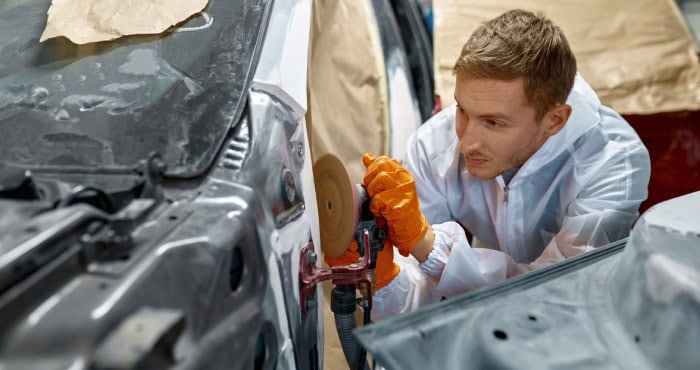
- Push to prep or push to paint: A PDR technician may use paintless dent repair to minimize a dent, then hand the panel off for paint work requiring only minimal filler and refinishing. This hybrid approach is common for deeper creases and complex edges, helping restore the panel while preserving the vehicle value.
A Brief History and Toolkit
Core PDR repair tools include:
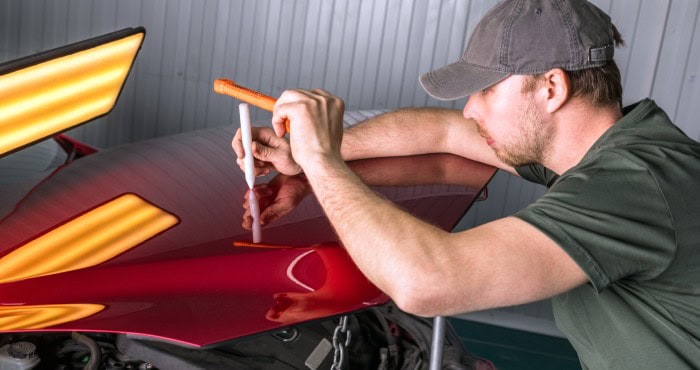
- Metal rods and body picks to gently massage dents from behind panels
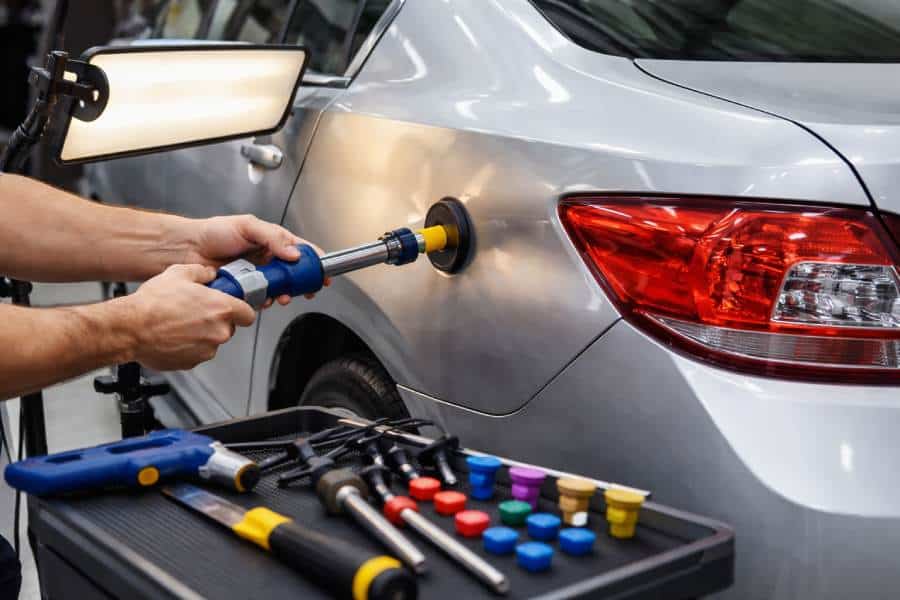
- Glue pulling with tabs and a dent puller when back-side access is limited
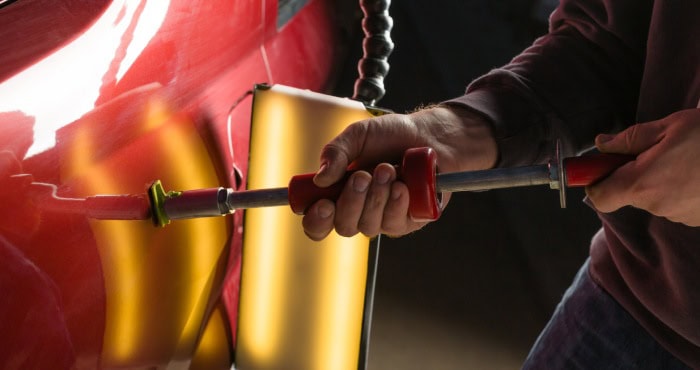
- Light hammers and knockdowns with non-marring hammer heads to control high spots and finish the surface
These body repair tools reflect a lineage that reaches back to Repoussé and chasing, adapted to modern automotive metallurgy and clearcoats.
Trusted Resources
Foundational texts like Frank T. Sargent’s The Key To Metal Bumping and contemporary manuals from AuthorHouse reinforce fundamentals for panel repair and metal shaping. Professional “Body Repair Dent Removal Tools” kits and vetted PDR tool brands are widely available through Amazon and trade suppliers. Training terms you’ll hear—such as Push to Paint and push to prep come from real-world workflows that bridge PDR and refinishing.
DIY Dent Repair: Tools, Techniques, and Red Flags
What you’ll need:
- Viewing and access: a line board or light, safe panel access
- Tools: metal rods, body picks, glue pulling tabs, a dent puller, and light hammers with non-marring hammer heads
- Tapping skills: precise control to lower high spots without scuffing clearcoat
Key techniques:
- Gentle pushes: Use PDR rods behind the panel to incrementally move metal. Avoid over-pushing that causes high spots.
- Glue pulling: On the outside, apply tabs with specialized adhesive, pull the dent incrementally, then tap down peaks.
- Heat management: On aluminum panels, controlled warmth helps reduce spring-back; steel panels need less heat but more patience.
When to stop:
- If you see paint damage, cracked clearcoat, or you feel the panel oil-canning, the metal may be stretched.
- Complex creases near edges and body lines are best left to pros.
DIY and Bargain Red Flags
- Kits that promise “instant” dent removal on all damage types
- Aggressive suction cups on sharp creases
- Anyone suggesting drilling access holes without corrosion protection
- No test panel practice before working on your own motor vehicle
Choosing the Right Pro and What to Expect from the Repair Process
Select a skilled PDR technician who has a solid track record, offers upfront pricing, provides straightforward explanations of their techniques, and is known for delivering high-quality work, regardless of whether they’re affiliated with a body shop or operate as an independent specialist.
Step-by-Step PDR Workflow
- Inspection: Map dents, note creases, panel material, and any paint damage.
- Access and setup: Remove trim as needed to reach the back of the body panel; set up lighting to read high spots and lows.
- Metal movement: Use metal rods, body picks, and tabs with a dent puller for glue pulling when necessary.
- Finishing: Tap down highs with light hammers and non-marring hammer heads to refine the surface.
- Quality check: Confirm panel repair under multiple light angles; discuss any areas that require push to prep.
Fixing dents in your car doesn’t need to break the bank or cause unnecessary stress when you want to enhance its appearance and feel. Thanks to affordable methods like paintless dent repair and door ding repair, you can address minor issues quickly, maintain your vehicle’s value, and achieve a sleek, polished look without facing hefty repair expenses.
The crucial steps are to act promptly, understand your repair options, and collaborate with skilled experts who prioritize effective solutions over unnecessary add-ons. By choosing the right approach—whether it’s door ding repair for small impacts or paintless dent repair for larger minor dents—you can refresh your car’s appearance, regain confidence on the road, and save money at the same time.
About The Author