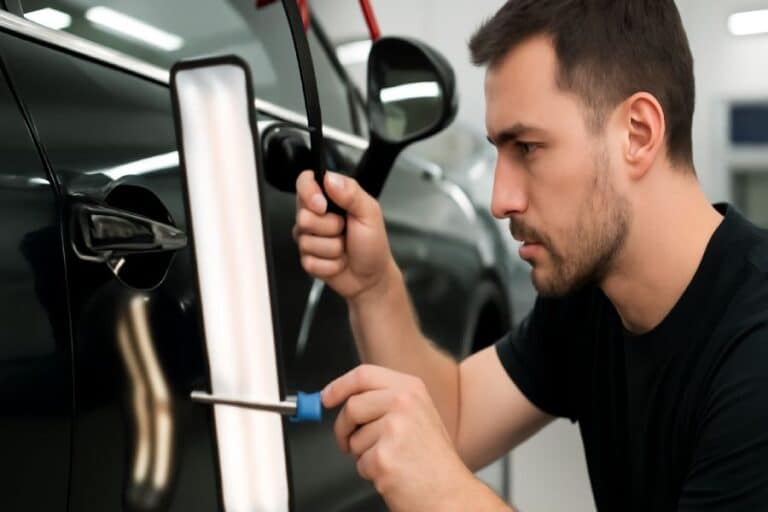

Phoenix Rising From Dents: Dent Repair That Resurrects Panels
Dings, dents, and hail damage can often be repaired without the need for paint or fillers. Paintless dent repair (PDR) employs specialized methods to fix panels while maintaining their original surface finish. This technique originated at Mercedes-Benz in Sindelfingen and was further developed by professionals like Oskar Flaig, making it a reputable option today. Whether performed at your location or in a repair shop, PDR provides a quick and economical solution that delivers excellent results.
Understanding Repairability and How PDR Brings Panels Back
Paintless dent repair (PDR) utilizes the natural elasticity of metal and the resilience of contemporary automotive paint. When a dent occurs, the metal often bends but has the ability to revert to its previous form, especially if the paint remains unbroken and the metal hasn’t been excessively stretched. Modern clearcoats are designed to endure gentle adjustments, allowing many dents to be fixed without the need for fillers or a fresh coat of paint.
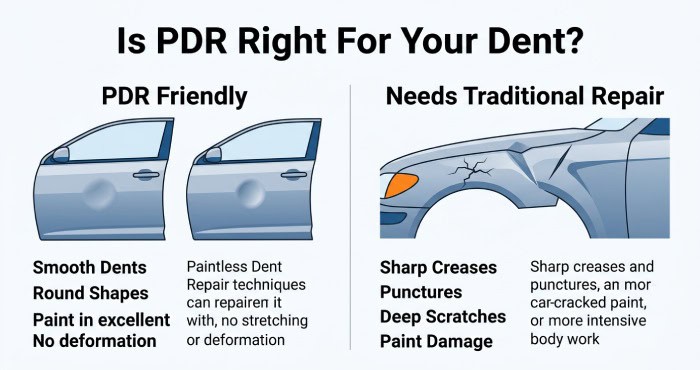
Nevertheless, not every type of damage is suitable for this method. PDR is most effective for minor dings, small creases, and hail damage, while more severe issues like sharp dents, punctures, or extensively stretched body panels require traditional repair techniques. Expert technicians evaluate the affected area by examining light reflections to assess tension and depth, which helps them decide if methods like glue pulling are appropriate. Innovations in specialized tools and training have further enhanced PDR, making it a precise and increasingly popular alternative to standard body repair techniques.
Inside the Repair: Step-by-Step Process, Tools, and Quality Checks
A meticulous paintless dent repair follows a measured sequence designed to preserve the factory finish while restoring shape:
1) Mapping and access
The technician uses reflection boards or LED lights to read distortion and identify crowns. Access points are planned behind trim or factory openings to avoid drilling.
2) Controlled metal movement
Using metal rods and body picks, the tech incrementally lifts the lows while tapping down highs, balancing pressure and release. For areas without backside access, glue pulling is applied using tabs and a dent puller to progressively lift the dent without disturbing paint.
3) Managing stress and crowns
Tension methods—strategic tap-down, soft hammers, and blending—relax stressed zones around the impact. This prevents overcorrection and preserves panel integrity.
4) Finishing and verification
With the shape restored, micro-highs are leveled, and the panel is rechecked from multiple angles. The technician confirms that orange-peel texture, light flow, and body lines match adjacent areas.
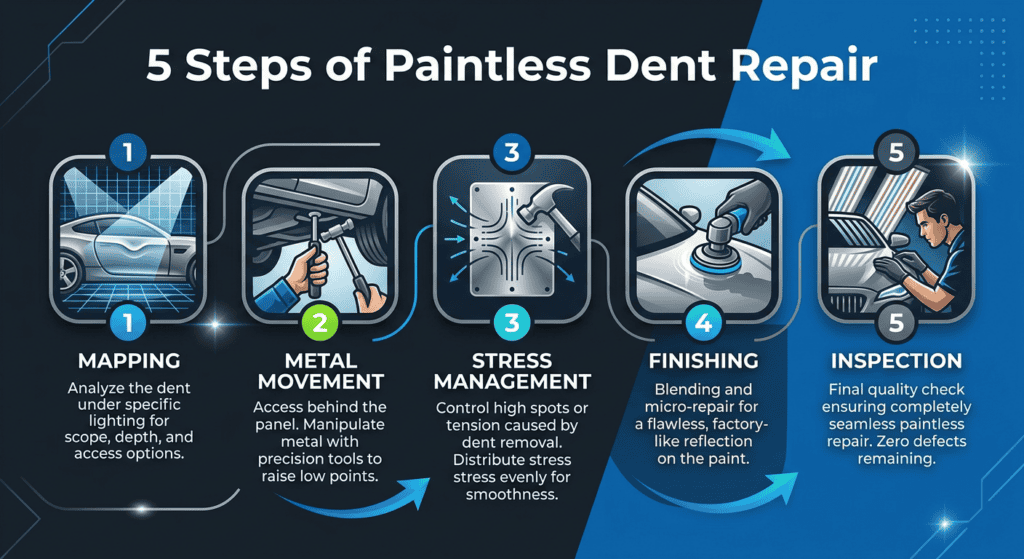
5) Final inspection and customer review
The result is shown in natural and artificial light to ensure no distortion remains. Documentation supports any insurance claim related to auto hail damage or minor collision damage.
Core Tools and Techniques
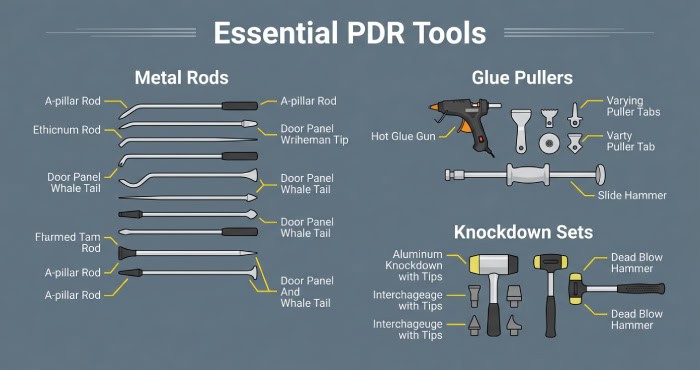
- Metal rods and body picks: For precision pushing from behind the body panel.
- Glue pulling and tension methods: For areas with no access, especially on roofs and rails after hail damage.
- Dent puller and knockdown sets: Controlled lifting and tap-down for balanced metal movement.
- Dedicated dent repair tool selections: Purpose-built tips, leverage devices, and lights that minimize risk to the factory finish.
This workflow shines in both mobile dent repair and in-shop repair scenarios. For busy professionals, mobile dent repair brings auto dent repair to a driveway or office park, yielding quick repair turnarounds. Shops that offer both mobile and in-shop repair can address everything from minor dent removal to more complex access challenges while remaining a body shop alternative for many jobs.
PDR vs Traditional Bodywork, Tough Cases, and Choosing the Right Technician
PDR vs Traditional Bodywork: Techniques, Pros/Cons, Cost, and Finish
- Techniques: PDR relies on precise manipulation instead of sanding, priming, body filler, and paint restoration. Traditional auto body and collision repair remove coatings, level damage with filler, and respray panels, then blend adjacent areas.
- Pros: Paintless dent removal is typically more cost-effective, preserves the factory finish, and delivers a quick repair—often same day—while maintaining OEM (original equipment manufacturer) corrosion protections. It’s a compelling body shop alternative for dents, dings, and auto hail damage.
- Cons: PDR has limits; a sharply creased panel with broken paint, stretched metal on panel edges, or structural minor collision damage may be beyond PDR alone and require conventional collision repair steps.
- Cost and insurance: Because materials and cycle time are reduced, PDR is often an affordable repair. Many insurers recognize PDR on an insurance claim for hail damage and auto hail damage. Reputable shops will offer a free estimate and help navigate coverage.
Addressing Difficult Repairs: Creases, Hail Damage, Aluminum Panels, and Edge Dents
Creased Panels:
Creases create concentrated stress along a specific line. Paintless dent repair (PDR) addresses them through precise pushes, tap-down techniques, and glue pulling. For more severe car creases, some light filling and paint touch-ups may be necessary.
Hail Damage:
PDR is particularly effective for multiple hail dents, utilizing mapping and glue tab techniques, making it an excellent option for damage from storms.
Aluminum vs. Steel Panels:
Repairing aluminum requires greater precision and more working cycles compared to steel, but it can still be repaired effectively while maintaining the original factory finish paint.
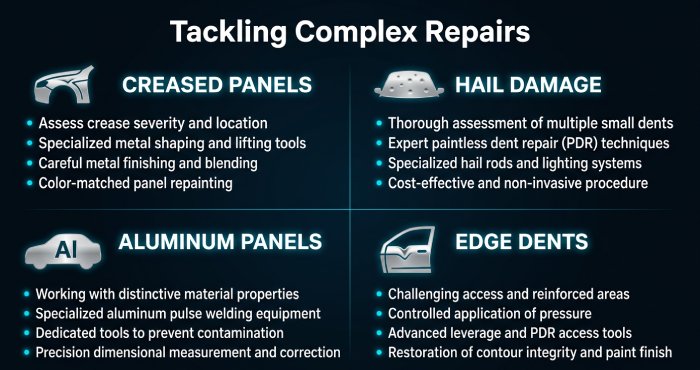
Edge Dents and Body Lines:
Areas under high tension demand meticulous control and might benefit from mixed repair techniques for optimal results.
Selecting the Right Technician and Minimizing Future Damage: Estimates, Insurance, and Care
- Qualifications and Experience: Opt for technicians adept at handling intricate dents, familiar with advanced tools and established PDR techniques.
- Reputation and Local Expertise: Seek reliable local professionals with excellent reviews and a track record of successful repairs.
- Estimates, Turnaround Times, and Insurance: Request detailed estimates that outline the specifics of the dents, and verify insurance coverage and expected repair durations.
- When to Use PDR: This method is ideal for minor dents and hail damage without paint damage — a cost-effective and value-retaining choice.
- When to Use Hybrid Methods: If the paint is compromised or the metal is stretched, consider a hybrid repair approach to minimize the need for filler.
- Maintenance and Prevention: Take care to park strategically, use protective covers during hail, and clean gently to safeguard repairs.
For readers exploring methods and options, learn more at Paintless Dent Repair. Whether you contact a local expert for auto dent repair or research Paintless Dent Removal history, the throughline is clear: PDR has matured into a refined repair technique that elevates auto body standards, complements collision repair when necessary, and stands as a proven body shop alternative that brings panels—and pride—back to life.
About The Author