
Can Paintless Dent Repair Reach Dents Behind Door Handles?
Why Dents Behind Door Handles Are Common in Door Ding Repair
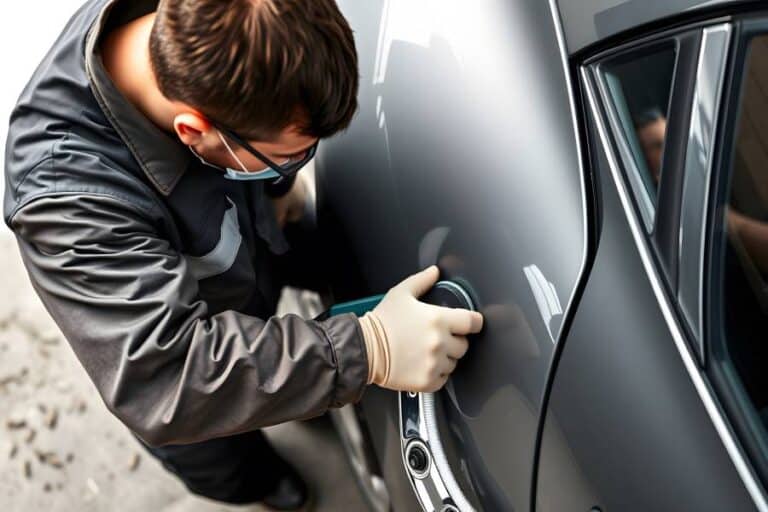
Dents behind door handles are among the most common issues handled in professional Door Ding Repair because that area is constantly exposed to contact. Parking-lot impacts, shopping carts, tight garage spaces, belt buckles, rings, and neighboring car doors often strike the handle pocket or the body panel directly behind it. Since this section of the door has curves, seams, and reinforced metal, even a minor impact can leave a noticeable ding.
For many Customers, this type of small dent repair seems simple until they realize the damage sits in a tight access zone. The dent may be shallow, but the location can make dent repair more technical than a typical open-panel ding. That is why a professional Auto Dent Repair Service often evaluates the handle area carefully before quoting a repair cost.
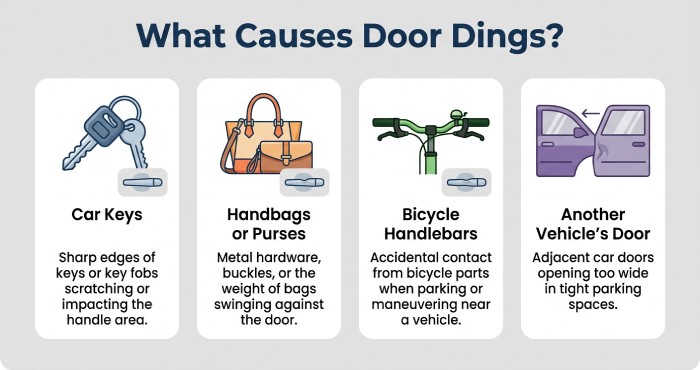
Common causes near door handles
Door-handle dents often come from repeated, low-force impacts. These include other car doors, keys, handbags, child car seats, bicycle handlebars, and commercial-use wear on fleet vehicles, municipality vehicles, law enforcement vehicles, City Vehicles, and School District Vehicles.
Why handle-area dents stand out
The eye naturally catches distortions around body lines, handles, and reflections. Even a tiny ding behind a handle can make a clean vehicle look neglected, especially during lease return repair inspections by a Leasing Company or trade-in appraisal.
How Paintless Dent Repair Accesses Tight Areas Behind Handles
Professional PDR technicians use several access strategies to reach dents behind door handles. The goal of paintless repair is to move the metal back into place while protecting the clear coat, trim, wiring, window components, and inner door structure.
A helpful overview of paintless dent repair explains why access and technician skill matter so much. In handle pockets, the technician may work through factory openings, window channels, drain holes, or interior trim access points. This makes PDR ideal when the paint is intact and the dent is not too sharp.
Access through the interior door panel
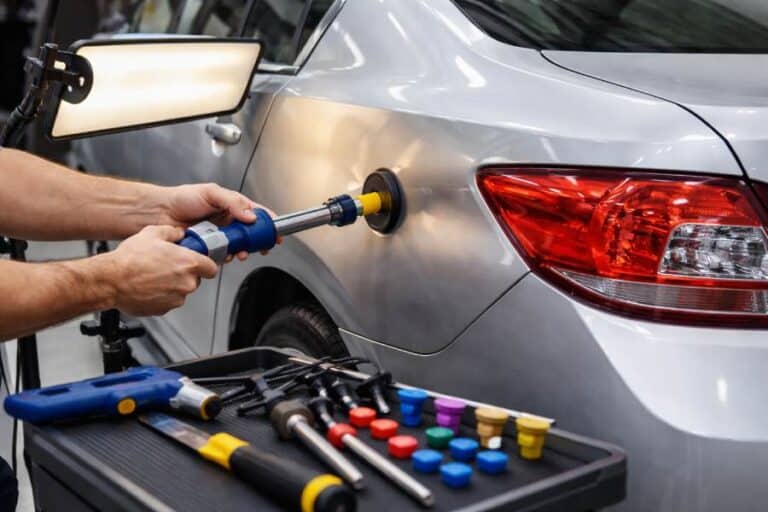
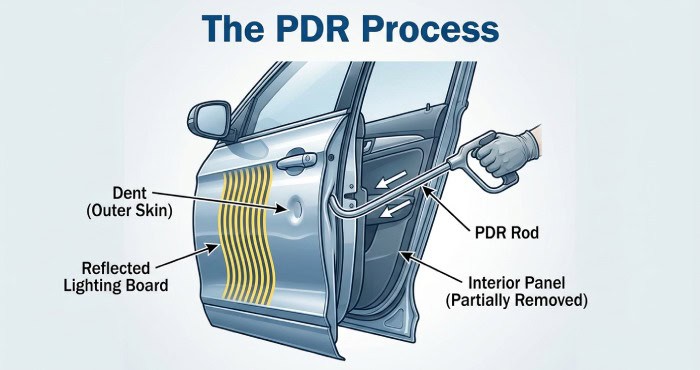
For many auto dent repair jobs, the technician removes or loosens the interior door trim panel. This creates access to the backside of the outer door skin. Once inside, specialized rods and picks are used to apply controlled pressure behind the dent.
This is common in professional ding repair, dent repair, and small dent repair because it allows the skilled technician to make precise pushes without disturbing the exterior finish. A skilled dent company such as The Dent Company or a local Paintless Dent Repair Service will use lighting boards to read the reflection and restore the panel gradually.
Access through existing openings
Sometimes door ding repair behind a handle can be completed through existing openings in the door. Technicians may use factory holes, latch openings, or wiring-pass-through points to avoid unnecessary disassembly. This can support same day repair, same day service, and even repair while you wait options when the dent is minor.
For busy drivers, express dent repair and an Express Dent Service model can help save time while still delivering high-quality ding removal. Many shops offer phone estimates, free estimates, and an online Appointment Scheduler so Customers can upload photos before scheduling an appointment.
Glue-pull PDR for limited backside access
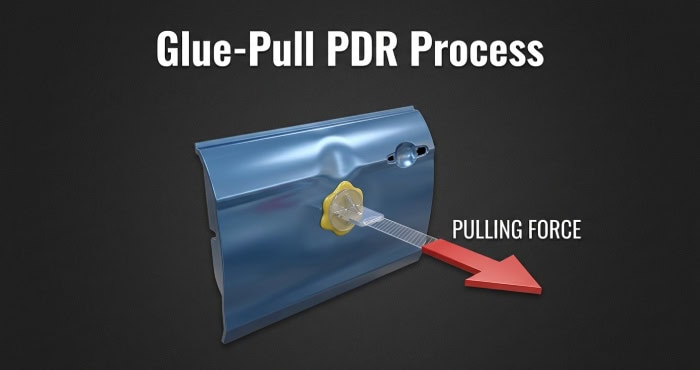
When backside access is restricted, technicians may use glue-pull PDR. This method attaches tabs to the exterior surface and gently lifts the dent outward. It is especially useful when the dent is behind a handle brace or close to an intrusion beam.
Glue pulling is not the same as using a consumer repair kit. A professional-grade approach requires correct tab selection, pulling force, heat control, and knockdown blending.
When Door Handle Removal or Specialized Tools Are Needed
Some dents beneath door handles, mounting brackets, or internal reinforcements may require handle or trim removal to access properly. During auto dent repair, technicians may remove door panels, vapor barriers, or access plugs to reach the dent safely and perform effective paintless dent repair.
Specialized PDR tools for handle pockets
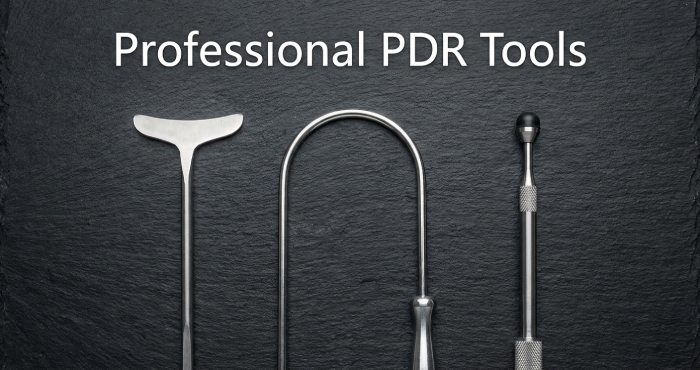
Specialized PDR tools include thin whale tails, curved rods, soft-tip tools, brace tools, and precision knockdowns. These allow controlled dent removal in areas where a standard rod will not fit. The technician may also use heat to keep the paint flexible and reduce the risk of damaged paint.
This is where professional express dent repair differs from a quick DIY attempt. A properly trained technician can provide guaranteed repair standards when the paint and metal conditions allow it.
Signs handle removal may be required
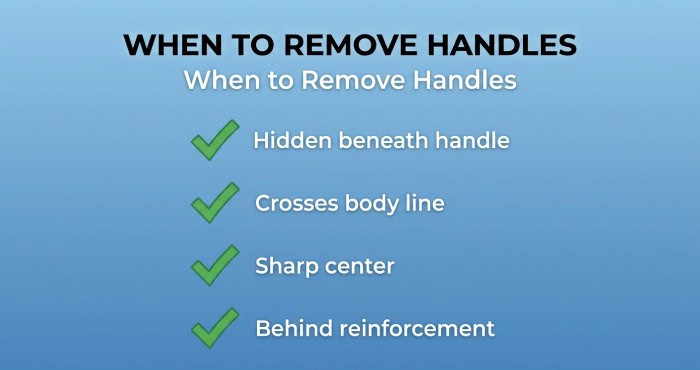
Handle removal may be needed if the dent is hidden beneath the pull handle, crosses a body line, has a sharp center, sits behind reinforcement, or cannot be reached through normal door openings.
Factors That Determine Whether PDR Will Work on These Dents
Not every dent behind a handle qualifies for PDR, but dents with intact paint, minimal metal stretching, and proper tool access often produce excellent results. Professional vehicle dent repair starts with an inspection to assess dent depth, panel material, paint condition, and accessibility, as cracked paint, rust, or deep creases may require conventional refinishing instead.
Paint condition and metal stretch
If the dent has sharp edges or visible damaged paint, the technician will explain the limitations. PDR can restore shape, but it cannot replace missing paint. In contrast, shallow dents behind handles are often ideal for small dent repair, ding repair, door ding repair, and door ding removal.
Vehicle use and repair goals
The repair approach may differ for personal cars, Fleet Vehicles, commercial vans, Municipality Vehicles, Law Enforcement Vehicles, and School District Vehicles. A business managing multiple vehicles with dents may qualify for Volume Discounts or volume discounts, especially when scheduling several repairs at once.
For insurance claims involving storm damage, hail damage repair, auto hail repair, hood dent repair, and roof dent repair, an Insurance Company may be involved. Depending on the claim, the insurance deductible can affect whether the owner chooses full repair, partial repair, or bundled dent repair services.
About The Author