
The Dent Detective: How Paintless Dent Repair Finds and Fixes Hidden Car Damage
What Paintless Dent Repair Is and Why It Matters
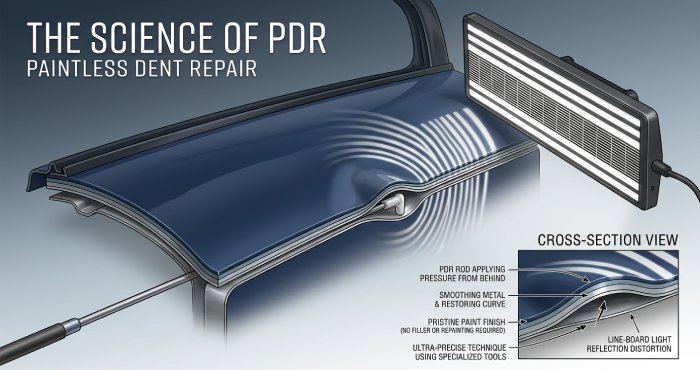
Paintless Dent Repair is a specialized vehicle repair method that restores dented metal panels without body filler, sanding, or repainting. Also called paintless dent removal or PDR, the process works by carefully massaging sheet metal back to its original contour while preserving the factory finish and original paint.
Unlike traditional repair at a body shop, paintless dent repair focuses on precision metal movement. Skilled technicians use controlled pressure, reflection lighting, glue pulling, metal rods, body picks, and tapping down techniques to correct minor dents, door dings, hail damage, minor collision damage, and even some large dents. The goal is not simply dent removal it is panel repair that maintains the vehicle value and avoids unnecessary bodywork.
PDR matters because modern auto body panels are engineered with thin but resilient steel panels and aluminum panels. When the paint has not been cracked and the metal has not been overstretched, paintless dent removal can often deliver a quick repair with no sanding, no painting, and less disruption than collision repair.
The Origins of Modern PDR
Modern Paintless Dent Repair evolved from early automotive metal-finishing techniques designed to restore damaged panels without replacing them. Over time, technicians refined methods for carefully manipulating metal from behind the panel, allowing many small dents and dings to be corrected while preserving the original factory paint.
Today, PDR combines traditional metalworking knowledge with specialized tools, precision lighting, and advanced techniques. Technicians evaluate factors such as metal movement, dent depth, panel access, paint condition, and stretching to determine whether a vehicle is a good candidate for paintless repair.
The Dent Detective Process: Inspecting and Mapping Hidden Damage
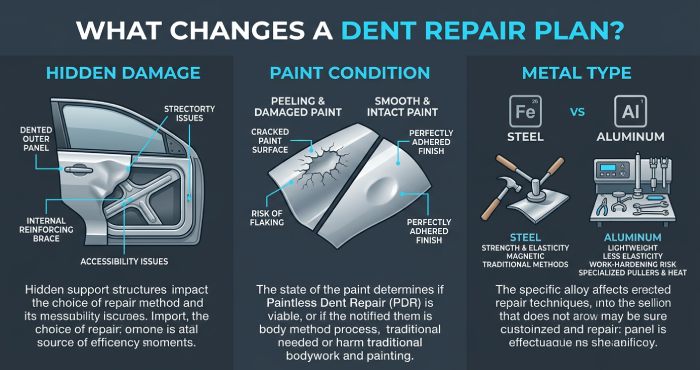
A skilled PDR technician works like a detective, carefully inspecting the vehicle under controlled lighting to identify hidden crowns, creases, pressure points, and metal tension. They also check the paint and panel condition, as intact factory paint is generally ideal for PDR, while repainted panels require extra care. The final estimate depends on the dent’s size, depth, location, accessibility, and whether the panel is steel or aluminum.
Mapping Low Spots, High Spots, and Access Points
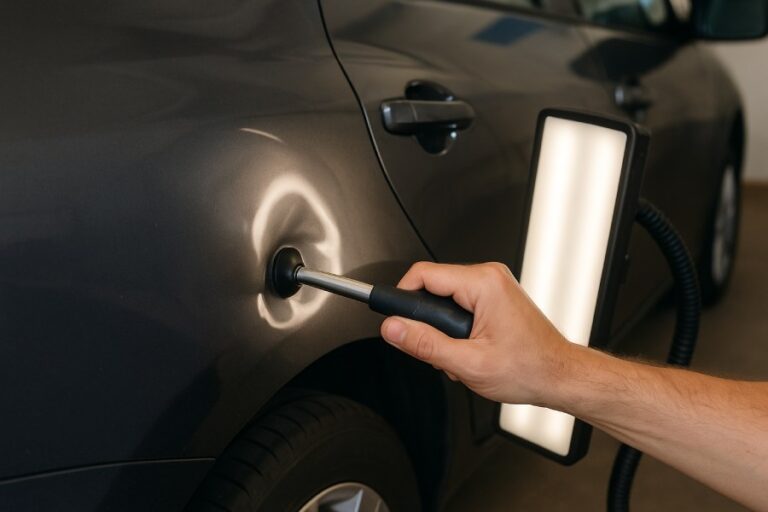
PDR lights and reflection boards help technicians map dents by revealing low and high spots through distorted reflection lines. This precision is especially useful for hail damage, door dings, and larger collision dents, allowing technicians to carefully correct crowns, stretched metal, and damaged areas for a smooth finish.
Why Hidden Damage Changes the Repair Plan
Hidden damage can turn a simple mobile dent repair into a more complex damage repair. For example, a shallow-looking dent may involve a brace behind the panel, limiting tool access. A large dents repair on a quarter panel may require trim removal, glue pulling, or a push to paint plan if the finish is already compromised.
- Paint Condition: Original paint responds best to PDR. Repainted panels require caution because glue pulling, a dent puller, or aggressive pressure may lift weak paint.
- Metal Type: Steel panels generally move differently than aluminum panels. Aluminum requires more patience, heat control, and refined tools.
Reading Reflections to Find Door Dings, Hail Damage, and Large Dents
Paintless dent repair depends on what the eye can read through reflection. Technicians do not guess. They watch how the light bends across the panel and use that information to guide every push, pull, and tap.
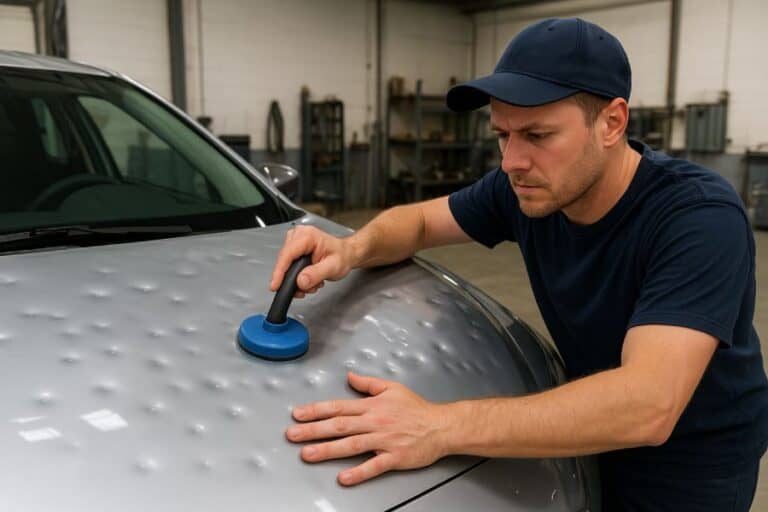
For hail damage, reflection reading helps identify the true number of dents, including minor dents hidden near body lines. For door dings, it reveals whether the impact created a tight center or a long crease. For large dents, the reflection shows where the metal panels are locked, crowned, or stretched.
Mobile dent repair teams serving areas such as Bardstown, Jefferson County, Brandenburg, E-town, Shelbyville, Lagrange, Mt Washington, Shively, Southern Indiana, New Albany, Floyd County, Clark County, Jeffersonville, and Clarksville often rely on portable lighting systems to perform the same detailed inspections on-site.
Tools and Techniques Used to Restore Panels Without Paint
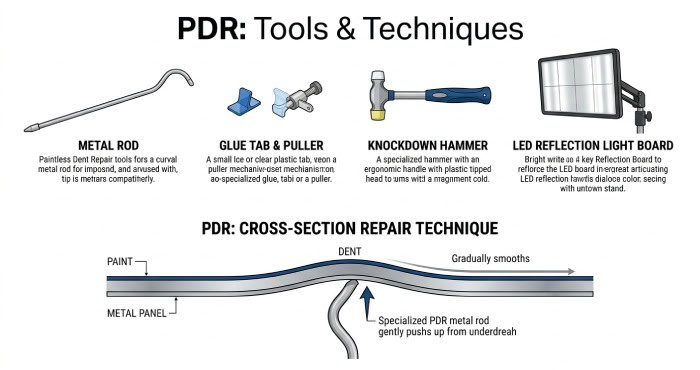
PDR uses specialized tools such as metal rods, whale tails, glue tabs, dent pullers, knockdowns, hammers, and precise lighting to access and reshape damaged panels. Rather than forceful hammering, technicians make hundreds of controlled micro-movements, carefully pushing low spots up and tapping high spots down for a smooth, factory-like finish.
Push, Pull, Tap, and Blend
When backside access exists, metal rods are used to apply pressure behind the dent. When access is blocked, glue pulling can lift the low area from the exterior. The dent puller attaches to glue tabs and raises the metal gradually. Body picks may be used for tight areas, while the non-marring hammer and knockdown tips refine texture.
- Controlled Heat: Heat may be used to reduce the risk of cracking paint, especially on aluminum panels, cold panels, or older finishes.
- Panel Memory: PDR works partly because metal panels have memory. If the sheet metal is not severely stretched, it can return close to its original shape.
Glue Pulling, Metal Rods, and Controlled Access
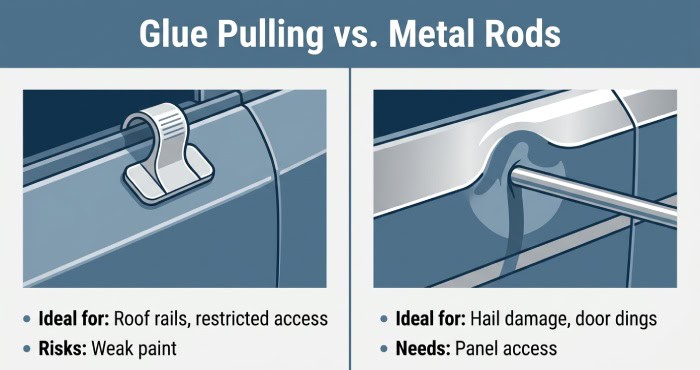
Glue pulling has expanded what mobile dent repair can accomplish. It is valuable on roof rails, double-walled panels, and areas where trim removal would be excessive. However, technicians must understand when glue pulling is safe. Repainted panels, failing clear coat, and existing paint damage may make glue pulling risky.
Metal rods remain essential for high-quality dent repair. With the right access, rods let the technician push precisely at the dent’s lowest point. This is often the best approach for door dings, hail damage, minor collision damage, and some large dents.
Benefits of PDR: Preserving Value, Saving Time, and Reducing Costs
The biggest advantage of paintless dent repair is preservation. Because there is no sanding, no painting, and no body filler, the factory finish remains intact. That protects vehicle value, especially for newer cars, collector vehicles, lease returns, and vehicles with documented original paint.
PDR is also faster. A quick repair for door dings may take less than an hour, while hail damage repair can often be completed faster than conventional auto body refinishing. Mobile dent repair adds convenience by bringing dent repair to the customer when the damage and workspace allow it.
Cost is another major benefit. Paintless dent removal usually costs less than traditional repair because it avoids materials, paint matching, booth time, and extensive panel repair. It is also more environmentally friendly because it reduces chemical use, paint waste, and refinishing emissions.
About The Author